Gastronomos Food Festival Returns for Its Second Year
Experience the very best of Greek…

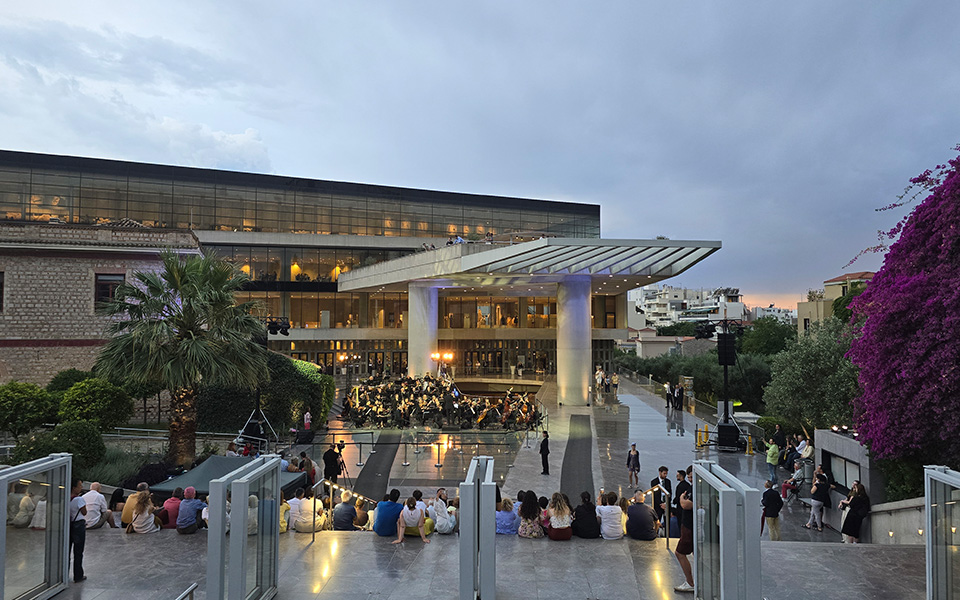
: As Athens enters the height of the summer season, the Acropolis Museum celebrates its 17th anniversary with a program of exhibitions and events that continue to attract visitors from around the world.
© Nikos Katsaros / Acropolis Museum
Seventeen years after opening its doors beneath the Sacred Rock of the Acropolis, the Acropolis Museum continues to reaffirm its position as one of the world’s leading archaeological museums. Welcoming almost two million visitors in 2025 alone and ranking among the world’s 40 most-visited museums, the institution enters this summer with an ambitious program that combines ancient masterpieces, contemporary artistic dialogue, and international collaboration.
At the heart of this year’s summer program is the new exhibition “Inspiration: Ancient Greek Art in Italy,” running through August 30. Presented as a cultural gift from Italy to Greece, the exhibition brings together 38 exceptional works – ceramics, bronze sculptures, marble statues, and paintings – loaned from Italian museums, many of which rarely travel abroad. Admission is free.
Through seven thematic sections, the exhibition traces the remarkable journey of ancient Greek artistic ideas across the Mediterranean, revealing how they shaped Roman civilization and continued to inspire artists and collectors from the Renaissance through the 19th and 20th centuries. Rich interpretive material and a trilingual catalogue place each object within the broader story of cultural exchange that has influenced European civilization for centuries.
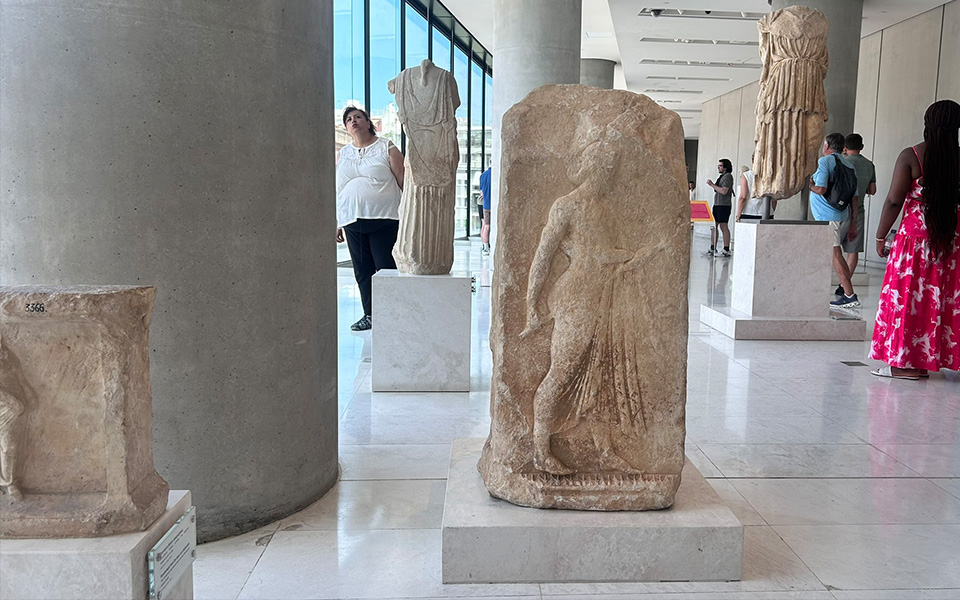
Nearly 1.99 million people visited the Acropolis Museum during 2025, securing its place as the 38th most-visited museum in the world.
© Acropolis Museum
The museum is also continuing its collaboration with the cultural organization NEON through “Lamassu of Nineveh,” the second chapter of the Michael Rakowitz & Ancient Cultures trilogy. Installed outside the museum on its western side until October 2026, the monumental sculpture recreates the protective Assyrian guardian figure destroyed during the recent conflict in Iraq.
Constructed from thousands of flattened Iraqi date syrup cans, the work forms part of Rakowitz’s long-running series “The Invisible Enemy Should Not Exist,” addressing the destruction and looting of cultural heritage in times of war. Positioned between the Acropolis Museum, its archaeological excavation, and the modern city beyond, the installation creates a powerful dialogue between ancient civilizations, memory, and cultural resilience. Like the summer exhibition, admission is free.
Alongside these headline exhibitions, visitors can also explore the museum’s ongoing display, “The Parthenon and Byron,” a compact but thought-provoking exhibition revisiting one of Greece’s most enduring cultural debates. Through rare historical documents, images, and the original Ottoman passport issued to Lord Byron, it examines the removal of the Parthenon Sculptures by Lord Elgin while highlighting Byron’s outspoken criticism of their destruction and removal from Athens. On view on the museum’s ground floor through the end of December, the exhibition also contributes to the continuing international discussion surrounding the reunification of the Parthenon Sculptures.

Visitors can join guided tours of the ancient Athenian neighborhood preserved beneath the Acropolis Museum.
© Nikos Katsaros
Beyond its exhibitions, the museum’s archaeologists continue to offer a series of engaging gallery talks throughout the summer. Running through July 26 is “The Erechtheion: A Journey Through a Remarkable Monument,” held on the final Sunday of each month through July. The guided presentation explores one of the Acropolis’ most fascinating temples, examining its innovative architecture, rich sculptural decoration, and the myths that have surrounded it since antiquity. The talks are conducted in Greek, begin at 1 pm, and last approximately 70 minutes. The remaining dates are June 28 and July 26.
Another excellent option is “Stories of Daily Life in a Neighborhood of Ancient Athens,” a guided exploration of the archaeological excavation beneath the museum. Using more than 1,100 artifacts alongside the excavated streets and houses themselves, archaeologists reconstruct 4,500 years of everyday life, revealing how ancient Athenians worked, worshiped, and raised their families. The English-language tour runs every Friday throughout the summer, beginning at 1 pm and lasting approximately 90 minutes. An admission ticket is required for adults, while children are admitted free.
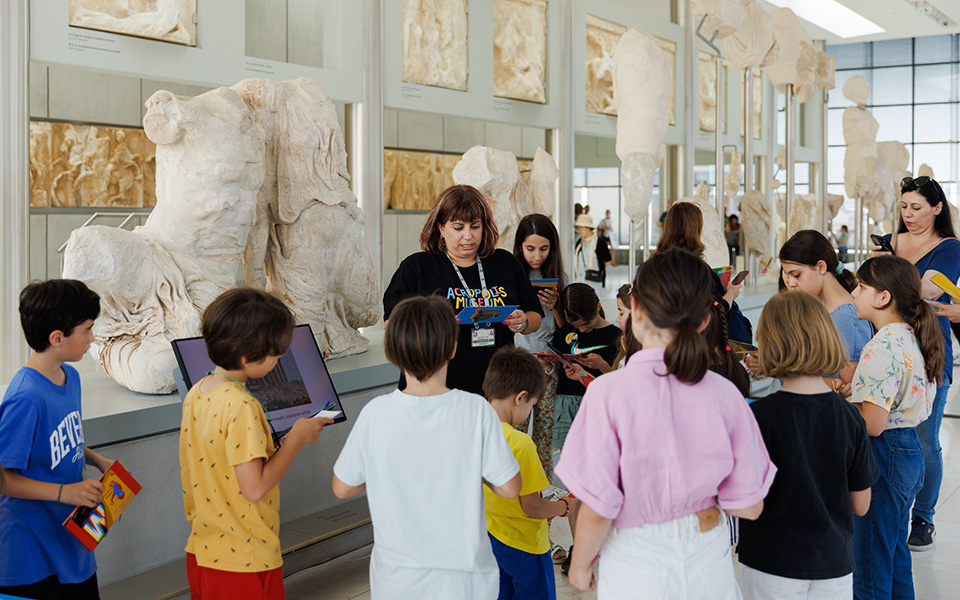
The Acropolis Museum continues to expand its educational programs, including family activities and guided gallery tours in both Greek and English.
© Natalia Tsoukala / Acropolis Museum
The museum’s success extends well beyond its galleries. Over the past year, it has continued to strengthen its international profile through major collaborations abroad, with objects from its permanent collections traveling to exhibitions in Australia, China, Italy, and Canada. At home, it has expanded its educational program with themed archaeological presentations, family activities, and guided tours in both Greek and English. New accessibility initiatives include an audio guide designed specifically for visitors with visual impairments, while hands-on family programs invite younger audiences to discover ancient Athens through storytelling and interactive exploration.
Music has also become an increasingly important part of the visitor experience. Over the past year, the museum has hosted concerts ranging from youth orchestras and chamber ensembles to piano recitals and poetry celebrations, transforming its galleries into cultural spaces where archaeology, music, and contemporary creativity meet.
To mark its 17th anniversary this month, the museum welcomed the Hellenic Broadcasting Corporation (ERT) National Symphony Orchestra for a celebratory concert under internationally acclaimed Spanish composer and conductor Oscar Navarro. Although adverse weather forced changes to the performance, visitors were still able to enjoy rehearsals and part of the concert inside the museum.
Those efforts continue to resonate with the public. Nearly 1.99 million people visited the Acropolis Museum during 2025, securing its place as the 38th most-visited museum in the world according to The Art Newspaper. It remains the only Greek museum to feature among the publication’s annual list of the world’s 100 most-visited museums – a testament not only to the enduring appeal of the Acropolis itself, but also to the museum’s evolving role as a destination for history, scholarship, and contemporary culture.
For anyone spending time in the Greek capital this summer, there has rarely been a better time to visit.
Experience the very best of Greek…
From July 12-25, internationally renowned artists…

The permanent removal of scaffolding from…

From farewell performances beneath the Acropolis…