Olive Oil from Lesvos, Greece: Economy, Cuisine and...
More than a culinary staple, olive...

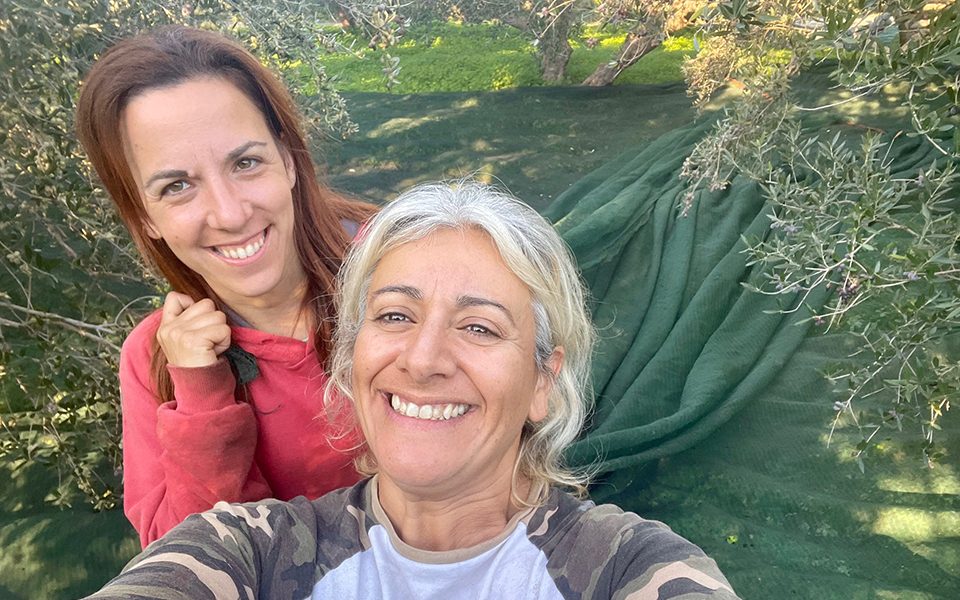
Maria Moraiti and a friend in Zariphico's olive grove.
Women olive farmers in Greece have always taken on essential, often unseen roles in the agrifood system. Part 1 in a series for the United Nations International Year of the Woman Farmer introduces their contributions, motivations, and enthusiasm for olive oil, highlighting voices from the half of the farming population that is too often overlooked.
Farming “is a way of life, a responsibility, and a deep emotional connection with the land” for Maria Martinaki (Amazona). “Olive trees teach patience, resilience, respect for nature, and humility. Working with them gives me a strong sense of purpose and identity. I love the feeling of creating something pure and real with my own hands. I also love that every bottle carries the soul of the land it comes from.”
Martinaki believes women olive farmers in Greece are “strong, hardworking women who often carry multiple responsibilities at the same time – agriculture, family, children, and community. Many women contribute enormously to rural Greece, often quietly and without the recognition they truly deserve.”
In spite of women’s important work on Greek farms, Chloe Dimitriadis (Biolea) points out that limited numbers of women take on “leading roles in agriculture. Many times, women farmers are not taken seriously.” Marianna Devetzoglou (Oleosophia) believes women can make a difference, but “we need to make our voices louder.”
To amplify some of these voices and help women gain the recognition their contributions deserve, we consider the six Greek women who responded to requests for comments. Five of them identify as farmers who also play additional roles in the agrifood system, while the sixth focuses on establishing links between small-scale olive oil producers in Greece and international consumers. They are all owners or co-owners of businesses that sell bottled and branded Greek extra virgin olive oil.
Greek women complete essential tasks at all stages of olive oil production, marketing, distribution, and consumption, from cultivation and harvesting to education about its flavors, benefits, and uses. For example, Martinaki is actively involved in the entire olive oil production process. Dimitriadis is an olive farmer who is also responsible for milling, bottling, and sales. Maria Moraiti (Zariphico) is a farmer and olive oil exporter. Christina Chrisoula (Taxidi) is a farmer who also works on olive oil production and organizes olive oil tastings and events.
Devetzoglou considers herself a farmer, “an educator, and a link between olive oil and consumers” who creates communities of olive oil lovers. Vera Alexandropoulou (Elysian Earth) connects producers in Greece with international consumers by “developing premium olive oil collections, building thoughtful branding and storytelling, preserving rare olive varieties, and helping communicate the value of Greek olive oil” by creating emotional links to places and traditions.

Maria Martinaki in her olive grove.
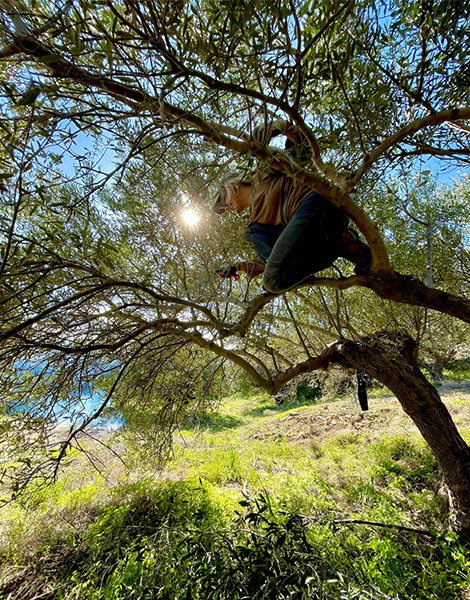
Maria Moraiti pruning an olive tree
These women find their work with olive oil both challenging and fulfilling. Martinaki voices common feelings when she says “olive oil is part of my roots, my family history, and my identity. I wanted to create something authentic and premium that could represent the beauty, strength, and culture of Greece.”
Peaceful time outdoors, feelings of community with other olive oil lovers, and appreciation of the creative process can enrich this life. Christina Chrisoula appreciates “the calmness, the energy, the space for introspection that the olive groves give me. I love that I always learn something new, be it about pruning, soil health and composting, or about how to achieve certain aromas and flavors in the olive mill! I also love the community that I have been creating all these years, with olive oil in the center of it,” all over the world.
Devetzoglou “fell in love” with her work on olive oil – ”its beauty, complexity, combination of art, science, and tradition. You feel you are part of something greater, and you carry a purpose to share this with others.” In addition, she says, “I enjoy the sense of freedom that it gives you, the serenity and the necessity to follow nature’s pace. It puts a lot of things into perspective.”
For Dimitriadis, high-quality extra virgin olive oil production – which requires many decisions about timing, temperature, treatment, and technique – is “an art. Choices that are made in the field and the olive mill help create the end result. This challenge is what makes the olive oil production process tricky, but exciting at the same time. The passion to create something amazing in any form of art makes all the difficulties in the process of creating worthwhile.”
Once the olive oil is ready, producers face the question of how to enable others to appreciate its flavor, health benefits, and numerous uses. Moraiti is “eager to export my olive oil, an honest olive oil produced with sustainable good practices.” She wants to convince consumers “that small-scale agriculture plays a crucial role in the quality of products as well as in the environment.” In addition, she believes “providing a pure product, as farmers, is the only way to keep our land and farms alive” in the face of increasing abandonment of farms and rural areas in Greece.
For Alexandropoulou, who works on branding and storytelling, “supporting this sector feels like contributing, in a small way, to the continuity of rural communities and their traditions, while also helping them find a place in a more global and demanding market.” She feels her work is “necessary for the producers who deserve recognition and fair positioning, and meaningful because it connects me to a Greece that is deeply rooted, diverse, and alive.”
Working with olive oil and sharing it with others can bring women a sense of fulfillment, peace, joy, and connection with the land, tradition, and human beings. However, the olive oil sector is not always a scene of idyllic beauty under clear blue skies. Part 2 in Greek Liquid Gold’s series of articles celebrating the International Year of the Woman Farmer considers the challenges faced by women olive farmers in Greece, as well as possible solutions and hopeful signs. Part 3 introduces the ways rural women contribute in and beyond their family and community.
More than a culinary staple, olive...
Archaeology reveals powerful Iron Age women...

From priestesses and poets to market...
Rich in flavor, packed with health...