Discovering Metsovo’s Timeless Spirit
At any time of year –...

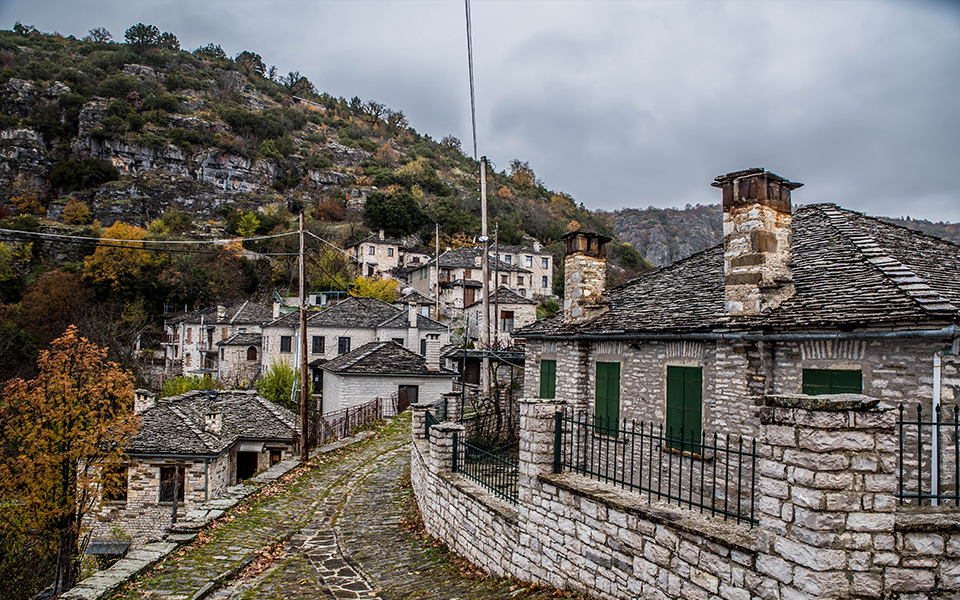
Kapesovo village, Zagorochoria
© Shutterstock
If you think Greece is only about beaches and blue seas, think again. Come November, the country’s mountains burst into a riot of autumn colors – chestnut trees burnished gold, maples flaming red, and deep green pines blanketed in morning mist. The air is cool, carrying the scent of woodsmoke from distant chimneys, and the upland meadows wear a light dusting of silvery frost.
This is the perfect season to leave the islands behind and head for higher ground. Here you’ll find traditional stone-built villages tucked into forested slopes, where life revolves around cozy hearths and slow, simple rhythms. Whether you crave invigorating hikes, wine-tasting and hearty rustic cuisine, or simply a quiet escape surrounded by old-world charm, Greece’s mountain villages in late autumn offer a different kind of magic.
From the rugged peaks of Epirus to the elegant slopes of Mt Parnassos, here are five to discover this November.
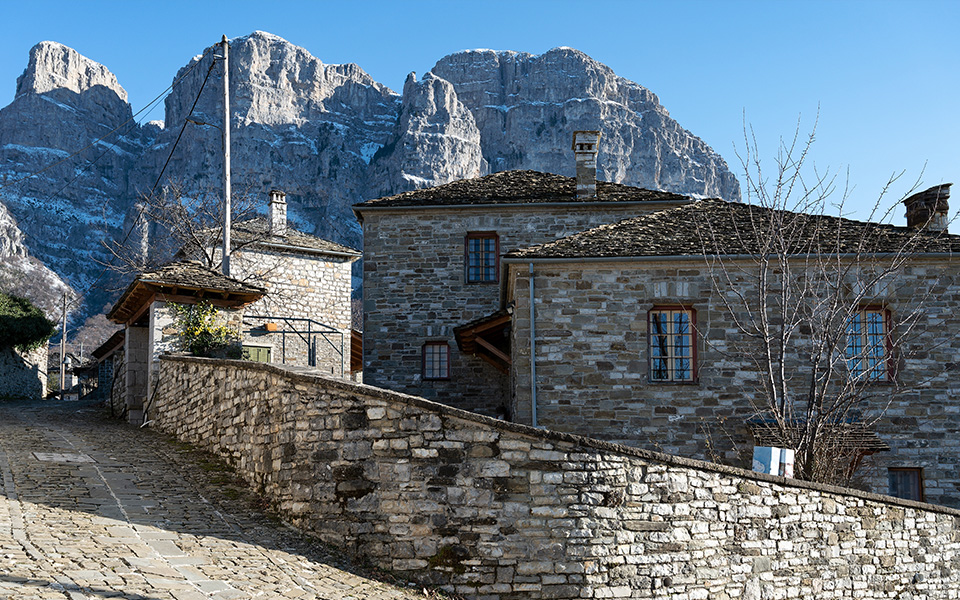
Papigo, Epirus
© Shutterstock
Set amid the dramatic peaks of Mount Tymfi in northwest Greece, the 46 stone-built villages of Zagori form one of the country’s most spectacular landscapes, where nature and architecture exist in perfect harmony. Declared a UNESCO World Heritage cultural landscape in 2023, this corner of Epirus is defined by soaring peaks, dense forests, and the vertiginous Vikos Gorge – officially the world’s deepest relative to its width.
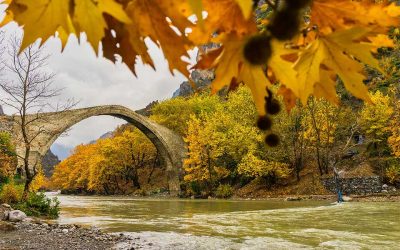
Each village is crafted entirely from local stone, topped with slate roofs, and connected by more than 100 arched bridges and the famed “skales,” stepped cobbled paths that once linked communities before the arrival of roads. Hikers can explore the well-marked trails of the Vikos–Aoos National Park, discovering charming settlements like Papigo, Monodendri (“lonely tree”), Vitsa, and Dilofo.
After a day of exploration, Zagori’s culinary offerings provide a warm welcome. Indulge in the region’s famed “pites” (pies), rich soups with rice and “avgolemono” (egg-lemon sauce), or grilled river fish, accompanied by a glass of tsipouro or warming rakomelo (honeyed raki).
For our guide to this enchanting region, click here.
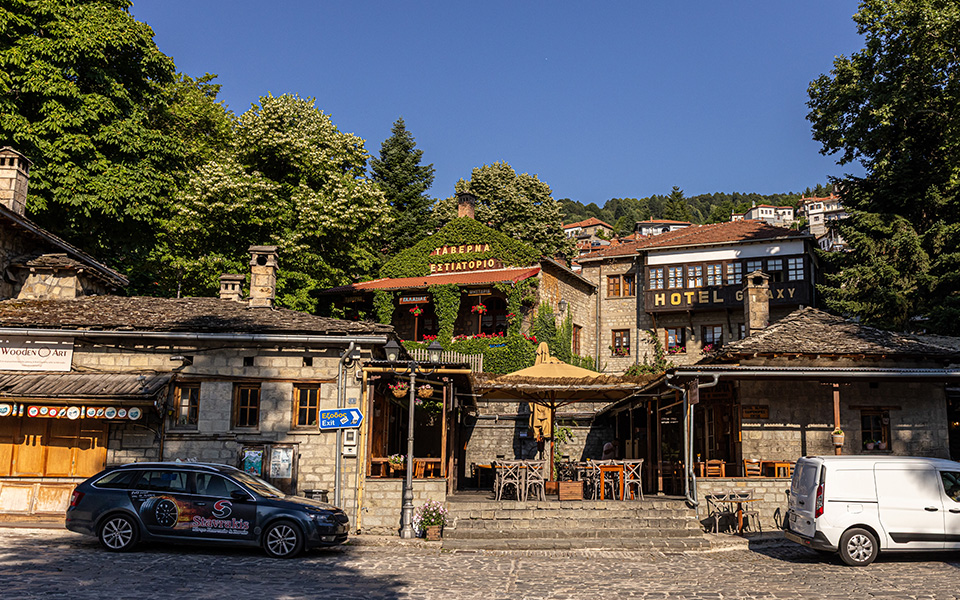
Metsovo, Epirus
© Shutterstock
Perched amphitheatrically on the northern slopes of Mount Pindos, Metsovo is one of Greece’s most beloved autumn retreats. Its stone houses with red-tiled roofs overlook misty valleys, while cobbled streets wind through lively squares filled with the scent of woodsmoke and grilled meats.
A proud Vlach heritage infuses the town’s culture, from its architecture and traditional textiles and embroidery to its celebrated cheese- and winemaking practices. You might even hear some of the elderly residents chatting in Vlach, a language with Balkan roots.
At 1,200m, Metsovo offers a perfect base for exploring the surrounding mountains. Hike or drive to the Katara Pass, one of Greece’s highest mountain routes, or visit the artificial Aoos Springs Lake for scenic waterside walks. Culture lovers can explore the Averoff Museum, the Baron Michael Tossizza Foundation, the Folk Art Museum, and the Aghios Nikolaos Monastery.
No trip to Metsovo is complete without sampling its culinary treasures. Its distinctively nutty, smoked Metsovone cheese – designated PDO status – robust Katogi Averoff wines, and hearty handmade pies – or melted saganaki sprinkled with paprika – offer comfort after a day in the crisp mountain air.
For more on Metsovo, click here.
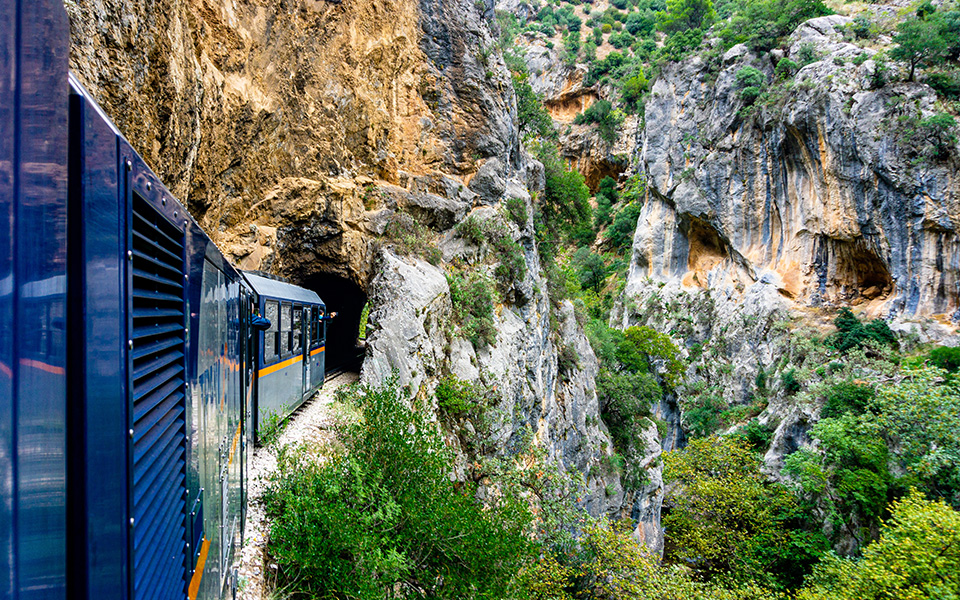
Kalavryta, Peloponnese
© Shutterstock
Nestled at the foot of Mount Helmos in the northwest Peloponnese, Kalavryta is a small town steeped in history and framed by dramatic scenery. Just a 2.5-hour drive from Athens, it makes an ideal weekend escape. Be sure to hop aboard the iconic cog railway, which has climbed the Vouraikos Gorge since 1896. The 22-km journey to Diakofto – also part of the European E4 trail – winds past sheer cliffs, pine forests, and the gorge’s crystal-clear river, providing a unique perspective on the landscape.
History is never far from view: the Kalavryta Massacre Memorial and Holocaust Museum commemorate the tragic events of December 1943, while the nearby Holy Monastery of Aghia Lavra marks the birthplace of the Greek War of Independence in 1821.
Outdoor adventure is abundant. The Helmos-Vouraikos Geopark, one of eight Greek sites in UNESCO’s Global Geoparks Network, offers hikes through the Vouraikos Gorge, quiet strolls by Lake Tsivlou, and descents into the Cave of the Lakes with its subterranean pools. For the ambitious, the Waters of Styx trail rewards hikers with sweeping views over Helmos’ 2,355-metre peaks.
Back in town, cafés and tavernas serve local delicacies and warm fires, ensuring a cozy end to days spent exploring.
Click here for our in-depth guide to the historic town of Kalavryta.
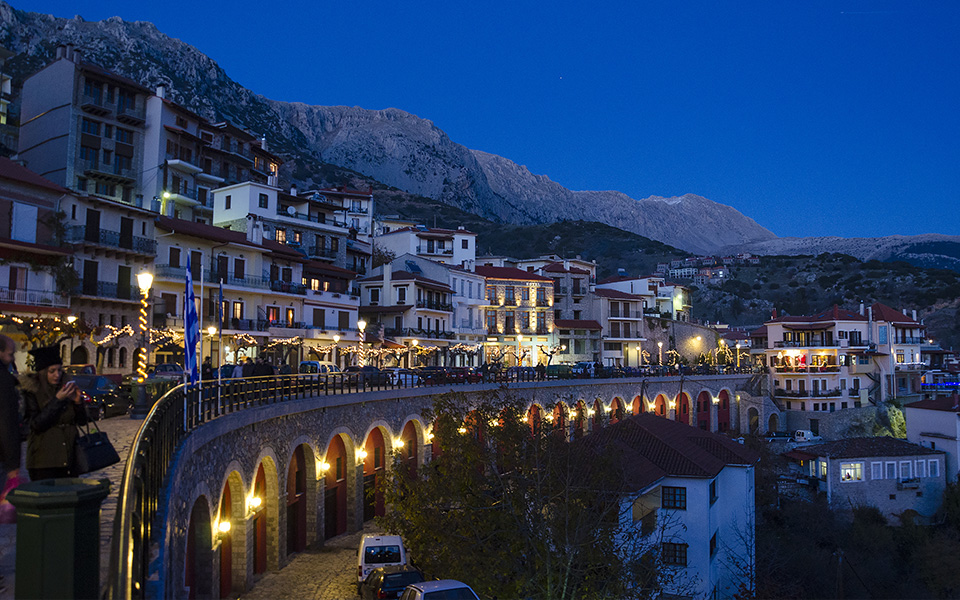
Arachova, Boeotia
© Shutterstock
Perched at 973m on the southern slopes of Mount Parnassos in central Greece, Arachova has long been a favorite retreat for day-tipping Athenians seeking crisp mountain air and a lively town atmosphere. Often dubbed the “Winter Mykonos” – though the comparison does little justice – it offers a blend of cosmopolitan charm, traditional architecture, and scenic beauty. Just 8km from the UNESCO World Heritage Site of Delphi, Arachova makes a perfect base for exploring ancient history and the surrounding mountains.
The town itself is built amphitheatrically, with narrow streets lined with boutique shops, cafés, and tavernas. The main artery of Delfon Street is home to an extraordinary variety of shops and eateries to suit all tastes. Out of the peak winter months, the atmosphere is calmer yet still vibrant, and the culinary scene shines: enjoy local delicacies like formaela cheese, hearty pies, and mountain herbs prepared with contemporary flair, or linger over a warming glass of local wine by a crackling fire.
For outdoor enthusiasts, the mountains around Arachova are ideal for hiking. A 3.5-kilometre uphill trail leads to the Corycian Cave, sacred to Pan and the nymph Corycia, and from there, the European E4 trail winds toward Delphi, offering breathtaking views over the Crissaean Gulf and the Peloponnese’s distant peaks.
For more ideas on what to see and do in Arachova, click here.
Tsagarada, Pilio
© Shutterstock
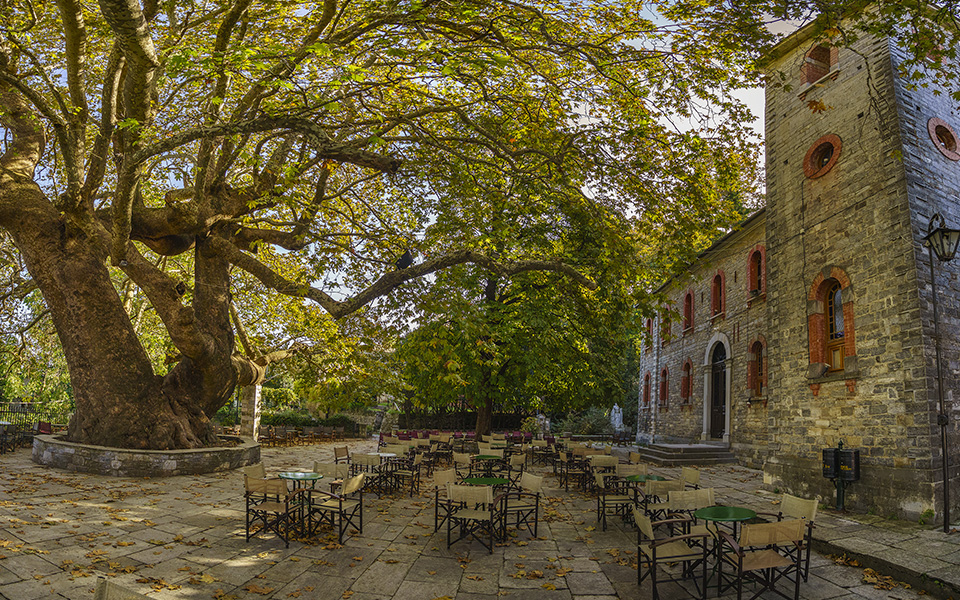
Where mountains meet the sea, Pilio is a peninsula of almost mythical beauty, rising between the Pagasetic Gulf and the Aegean Sea. Its densely wooded slopes, veiled in mist and crisscrossed by narrow roads, reveal hidden clearings with apple groves, walnut trees, and chestnut forests. Driving or walking through Pilio, the landscape constantly shifts: beech and oak forests give way to rustic stone-built villages with cobbled streets, wide paved squares, and plane trees so large they create a fairytale canopy over your head.
Over 70 villages await exploration, from the bustling tourist-friendly hub of Tsagarada to the quieter hamlets of Zagora, home to PDO apples and the sweet “honey of the Centaurs” petimezi – a molasses-like syrup). Taverns across Pilio serve rich, locally inspired dishes: stewed rabbit, baked goat, handmade pastas with rich sauces, and a smorgasbord of pies with filo pastry.
Steeped in myth, Mount Pilio was the legendary homeland of the half-man, half-horse Centaurs. The wisest of all was Chiron, whose list of students included Achilles, Theseus and Asclepius – the god of medicine.
A ride on the historic narrow-gauge (only 60cm wide!) train from Ano Lechonia to Milies – first laid in 1903 – offers glimpses of both the lush interior and the coast beyond, while the Church of the Archangels in Milies, built in 1741, impresses with murals and extraordinary acoustics. Look out for the mural depicting the Zodiac Circle, titled “The Vain Life of the Illusory World.”
Great for all seasons, but simply magical in fall, click here for our comprehensive guide to this enchanting corner of Greece.
At any time of year –...
Just two and a half hours...
At 1,160m, Metsovo blends preserved mountain...

Unexpected discoveries and timeless classics. Everything...