Constantine P. Cavafy Finds a Home in Athens
A new statue on Dionysiou Areopagitou...


The secret to enjoying the cultural riches of Athens on a budget is to balance the headline attractions with quieter corners.
© Shutterstock
Athens is one of the world’s greatest cultural capitals, but exploring its museums and archaeological sites can be expensive. A visit to the Acropolis (€30), the National Archaeological Museum (€20) and the Temple of Olympian Zeus (€20) alone costs €70 per person. Fortunately, the city also offers lesser-known museums, affordable archaeological sites and historic neighborhoods that can be explored for little or no cost.
A little planning can help stretch your budget further. State-run museums and archaeological sites offer free admission on selected dates throughout the year, including the first and third Sundays of each month from November through March. Free or reduced admission is also available to eligible visitors based on age and nationality. Always check individual admission policies before visiting.
Here are some excellent places to start.

View from Acropolis Museum
© Shutterstock
Let’s face it: it would be seriously remiss to visit Athens without spending some time at the award-winning Acropolis Museum. Sitting just beneath the Sacred Rock, this striking modern building, which first opened to the public in 2009, offers the best and most comprehensive introductions to the artistic achievements of ancient Athens and the monuments that made the city famous.
Inside, thousands of objects recovered from the Acropolis and its surrounding slopes tell the story of a religious sanctuary that evolved over many centuries. The original Caryatids, the exquisite Archaic statues – many still bearing traces of their original paint – and the Parthenon Sculptures are among the highlights. Particularly impressive is the Parthenon Gallery on the top floor, where the surviving sculptural decoration is displayed in a space whose dimensions and orientation echo the ancient temple itself. Through the gallery’s glass walls, visitors can enjoy uninterrupted views of the Parthenon itself – and see where the sculptures originally belonged.
General admission is 20 euros, with a 10 euro reduced ticket for eligible visitors. This provides access to all exhibition galleries, as well as the archaeological excavation beneath the museum. Free admission is available on selected commemorative dates, including March 6, March 25, May 18 and October 28. Friday evenings are especially atmospheric, with opening hours extending until 10 pm during the winter season.

The Ancient Agora, the beating heart of the city.
© Shutterstock
If the Acropolis represented the religious and ceremonial heart of ancient Athens, the Ancient Agora was its beating heart. This was the great civic marketplace, a place of heated political debate, commercial activity, and philosophical discussion. Imagine a scruffy-haired Socrates wandering beneath the colonnades, challenging passersby with questions about justice, virtue and the meaning of life.
The archaeological site itself is a deliciously atmospheric place to explore, with shaded pathways, scattered monuments and the remarkably well-preserved Temple of Hephaestus overlooking the grounds. You really feel as though you’re walking in the footsteps of the ancients. The reconstructed Stoa of Attalos is another highlight, housing the Museum of the Ancient Agora and an impressive collection of everyday objects and sculptures recovered during excavations. Archaeological research in the area continues to this day, adding another fascinating dimension to the experience.
Admission is 20 euros, with reduced tickets at 10 euros. Yes, it’s a bit steep, but your ticket includes both the archaeological site and museum, which makes it better value. Winter visitors should also take advantage of the free-admission Sundays.

Roman Agora with the Tower of the Winds.
© Perikles Merakos
A stone’s throw from Monastiraki Square, the Roman Agora offers a fascinating glimpse into Athens during the centuries when the city was an integral part of the Roman world. Developed between 19 and 11 BC, under the patronage of the first emperor, Augustus, it became an important commercial center, complementing the older Greek marketplace nearby.
Although considerably smaller than the Ancient Agora, it has some interesting features to look out for. The monumental Gate of Athena Archegetis (“Athena the Leader”), with its imposing Doric columns, is a great place to pose for a photo, while the nearby Tower of the Winds is one of the best-preserved ancient structures in Athens. This ingenious octagonal building functioned as a combination sundial, water clock and weather station, demonstrating just how sophisticated ancient engineering could be.
Admission is 10 euros, with a reduced ticket costing 5 euros. Its convenient location makes it an easy addition to a leisurely stroll through Plaka and Monastiraki, and the surrounding streets offer plenty of opportunities to discover the city’s Ottoman and medieval heritage, too.
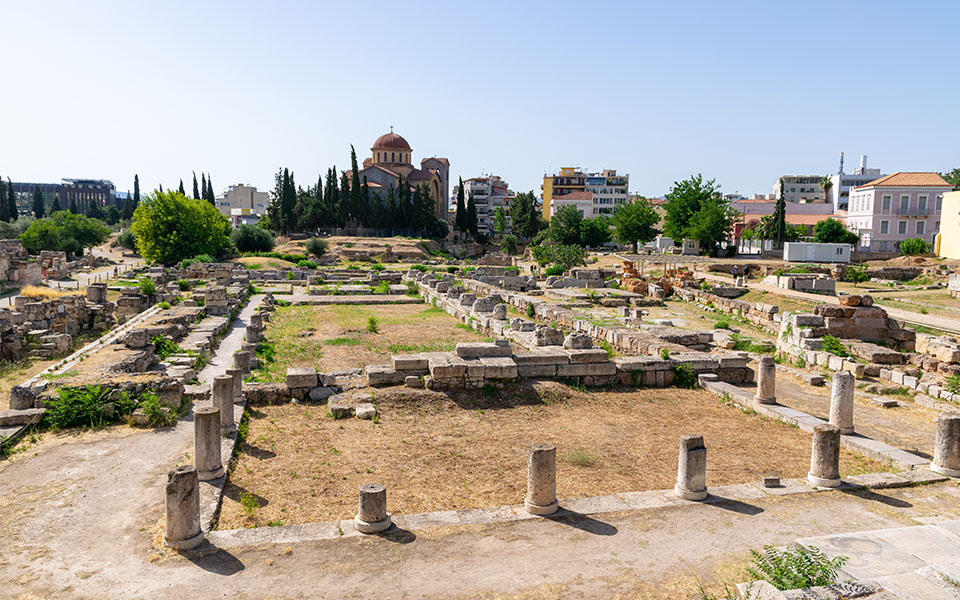
Looking to beat the crowds? The Kerameikos archaeological site provides a peaceful escape.
© Shutterstock
For a quieter, more immersive archaeological experience, away from the crowds, head west towards Kerameikos. Once situated beyond the ancient city’s defensive walls, this was Athens’ principal cemetery and one of its most important gateways. Its name derives from the potters who once occupied the surrounding district, although its archaeological treasures are much more varied than its ancient industrial associations might suggest.
Meandering through the site, visitors encounter sections of the ancient fortifications, the remains of monumental gateways and beautifully carved funerary monuments. Some of the finest tomb sculptures offer an intimate, sometimes poignant glimpse into the lives of ordinary Athenians, reminding us that the ancient past was about people as much as monumental temples and famous statesmen.
The small Archaeological Museum of Kerameikos, included in the admission ticket, displays finds from the cemetery, including sculptures, pottery and grave offerings. Admission is 10 euros, with reduced tickets at 5 euros.
Housed in a handsome 19th-century mansion in Plaka, the Museum of Greek Folk Musical Instruments is a pleasant surprise for anyone interested in the country’s living cultural traditions. Its collection of around 1,200 instruments was assembled by ethnomusicologist Fivos Anoyanakis, who donated it to the Greek state in 1978. The exhibits include instruments dating from the mid-18th century to the present day.
Rather than simply admiring the instruments behind glass, you can listen to recordings through headphones accompanying the displays, from the haunting melodies of traditional string instruments to the rhythms of island dances and mainland folk music.
Best of all, general admission is a very reasonable 5 euros, with reduced tickets at 3 euros. For one of the most affordable museum visits in central Athens, this little Plaka treasure is hard to beat.

Numismatic Museum
© Shutterstock
You don’t have to be a coin collector to appreciate the Numismatic Museum. Housed in the magnificent Iliou Melathron, the former residence of Heinrich Schliemann, the pioneering archaeologist whose excavations brought Troy and Mycenae to worldwide attention, it combines an extraordinary collection with one of Athens’ most beautiful historic buildings.
Designed by celebrated German-Greek architect Ernst Ziller and built between 1878 and 1879, the neoclassical mansion is decorated with elaborate mosaics and painted details inspired by ancient Greek art. Its architecture alone makes a visit worthwhile.
Inside, a collection of around 500,000 objects – including coins, medals, weights and seals – traces the development of currency from antiquity to modern times. Look out for the extraordinary examples from Ptolemaic Egypt.
Admission is 10 euros; the museum’s garden café is a particularly lovely place to take a break. It’s a winning combination of history, architecture and a little urban tranquility, just a short walk from Syntagma Square.
To understand Athens beyond its ancient monuments, a visit to the Athens City Museum is well worth it. Occupying two historic buildings near Klafthmonos Square, including the former residence of Greece’s first royal couple, King Otto and Queen Amalia, the museum explores the transformation of a relatively modest provincial town into the capital of the modern Greek state.
Its collections include paintings, furniture, personal belongings, documents and everyday objects that bring the city’s 19th- and early 20th-century history to life. The period interiors are especially evocative, offering a glimpse into the domestic world of Athens as it began to acquire the boulevards, public buildings and elegant neoclassical residences that still define parts of its cityscape.
Standard admission is 9 euros, with reduced rates of 5 euros or 4 euros for eligible visitors, depending on the category.

Founded in 1997 as Greece’s national institution for contemporary art, EMST found its permanent home in 2015 in the former FIX Brewery on Syngrou Avenue.
© Perikles Merakos
Athens’ cultural story doesn’t end in the 20th century. For something altogether more contemporary, head towards Syngrou Avenue and the National Museum of Contemporary Art (EMST), housed in the former FIX brewery.
The imposing industrial building has been transformed into a spacious exhibition space showcasing Greek and international contemporary art. Its collections and rotating exhibitions explore subjects ranging from identity and memory to politics, society and the modern human experience. It’s an excellent introduction to Greece’s contemporary creative scene, and a reminder that Athens remains a vibrant hub of artistic experimentation.
General admission is 10 euros, with reduced tickets at 5 euros for eligible visitors. There’s also a particularly attractive offer for budget-conscious travelers: the museum opens its doors free of charge on the first Thursday of each month, from 6 pm to 10 pm, excluding July and August. The café and restaurant are also open to visitors without a museum ticket.
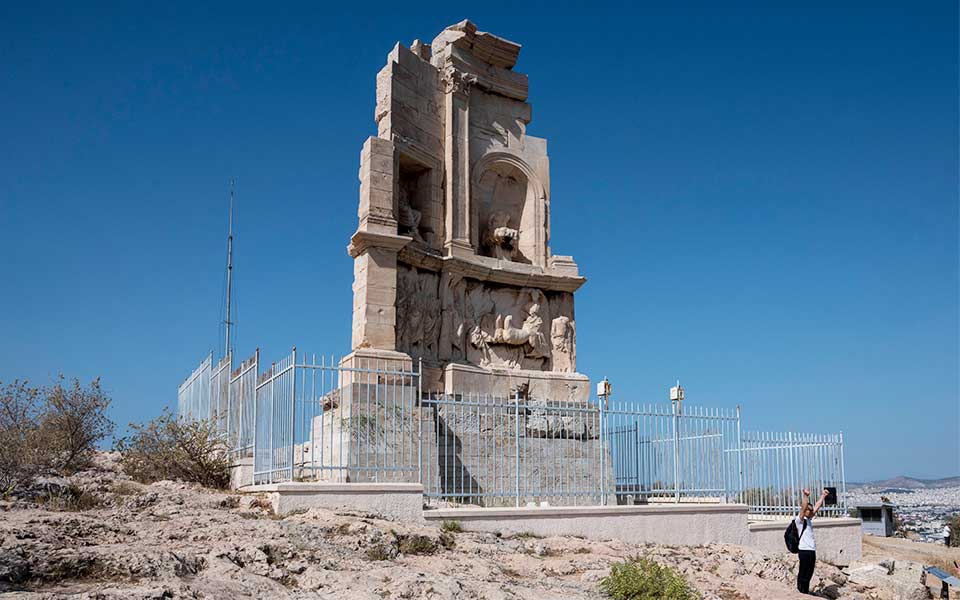
Filopappou Hill
© Perikles Merakos
One of the best things about Athens is that some of the city’s most rewarding historical experiences don’t require an admission ticket at all. Just southwest of the Acropolis, the Pnyx is one of the most important places in the history of democracy. This rocky hillside was where the Athenian assembly gathered to debate public affairs and vote on matters affecting the city. Standing on the ancient speaker’s platform, with the Acropolis rising in the background, is a wonderful way to connect with the birthplace of democracy.
The surrounding Philopappos Hill is also ideal for a leisurely walk, with winding paths, scattered archaeological remains and some of the finest panoramic views in Athens. Bring a bottle of water, take your time and enjoy the scenery. It’s especially lovely in the early morning or late afternoon, when the light brings the city and its monuments to life.
From here, it’s easy to continue exploring the historic center on foot. Start in Plaka, where narrow lanes climb towards the Acropolis and the little island-like settlement of Anafiotika in the heart of the capital. Arrive early, before the tour groups fill the streets, and allow yourself to get pleasantly lost among the colorful houses, tiny churches and flower-filled courtyards.
Nearby Monastiraki is a different experience altogether. Its bustling square, flea-market lanes and lively streets offer a fascinating mixture of old and new. Look out for the Tzistarakis Mosque and the remains of Hadrian’s Library, while the surrounding rooftops provide some amazing views of the Acropolis. Early morning is the best time to explore before the crowds gather.
Finally, make time for Psyrri, a neighborhood that has evolved from a traditional working district into one of Athens’ most creative urban quarters. Its narrow streets are decorated with colorful murals and street art, while old workshops, independent galleries, cafés and traditional tavernas – and the especially good “Beer Time” – sit alongside newer businesses.
Athens rewards curious visitors, and enjoying its cultural riches doesn’t mean having to visit every major attraction. Choose one or two of the big-ticket experiences, seek out the smaller museums, and leave plenty of time for exploring the streets, hillsides and historic neighborhoods in between.
Check free-admission dates before traveling, bring the necessary identification if you qualify for concessions, and remember that some of the city’s most memorable experiences cost absolutely nothing. You might even have enough left over for that extra coffee!
A new statue on Dionysiou Areopagitou...

Where dusk, movement, and memory meet,...
New excavations shed light on an...

How one of Athens’ most multicultural...