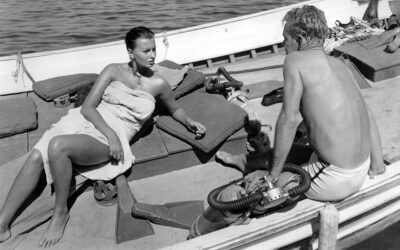
How Sophia Loren Changed Hydra Forever
Locals share their memories of behind-the-scenes...


The Castle of Hora was built in the early 13th century by the brothers Andrea and Geremia Ghisi, who were granted Amorgos as a fief by the Venetians. Perched on a high rock, it offers panoramic views over land and sea.
© Julia Klimi
Amorgos is perhaps the Cycladic island least touched by time. Largely unspoiled, it draws visitors with its laid-back atmosphere and the feeling of an authentic Greek summer. You sense it while climbing the long, 1,500-meter stepped path to Lagada, alongside locals riding donkeys or squeezed among the tables at the Panagia Epanochoriani festival on August 15, as your glass is filled and refilled while locals and visitors join in the “Syrianos” dance. You feel it, too, at the small port of Aegiali, watching fishermen return with the morning’s catch before settling into the traditional kafeneia.
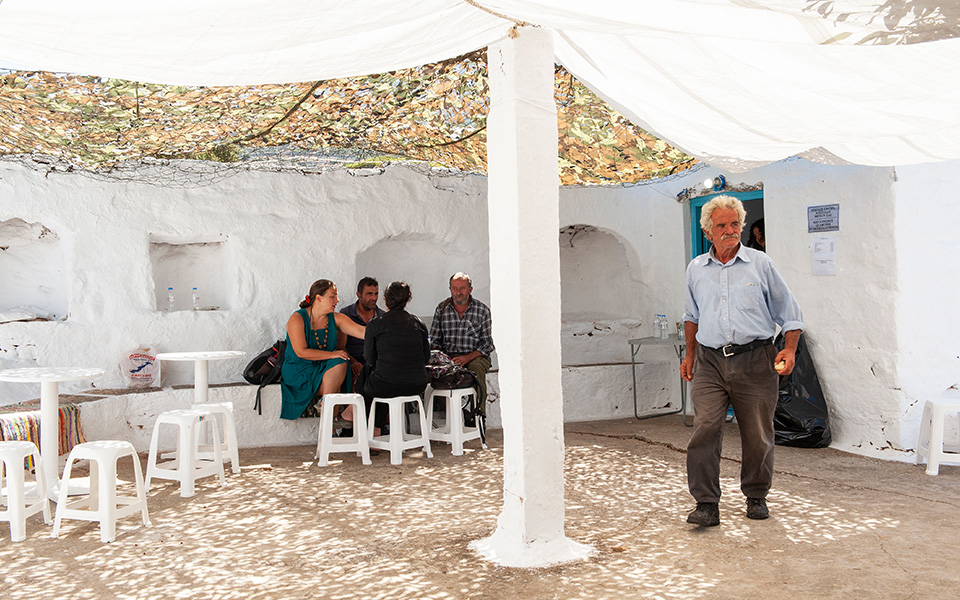
Panagia Epanochoriani, reached from Lagada’s main square via a beautiful 15-minute walk, hosts one of the island’s largest festivals on August 15. Here, a scene after Sunday Mass.
© Julia Klimi
Like a giant dragon at rest, the island stretches 32 kilometers from its southern tip to the summit of Krikelos in the north, which rises to 823 meters. Eight waymarked trails of rugged beauty – once the only means of communication between the villages – attract hikers from around the world. Those who explore them encounter landscapes of exceptional natural beauty. Keep in mind, however, that in the north, as far as the mountain settlement of Asfontylitis, roughly in the center of the island, both the trails and coastline are steep and rugged, with difficulty ratings of 3 and 4. By contrast, in the south, routes such as the Hora–Katapola trail are accessible to everyone. Walking is also the best way to get to know Amorgos, discovering its rare flora and fauna, as well as ancient acropolises, Early Cycladic monuments and churches. (For more information, see Hiking on Amorgos.)
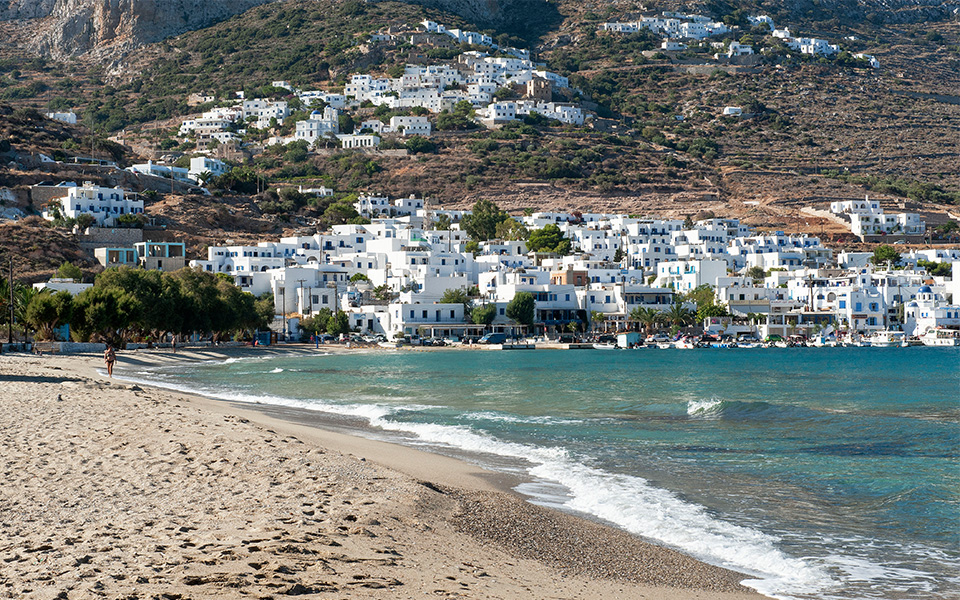
The traditional settlement of Aegiali is the island’s second port, beside a long, pristine beach.
© Julia Klimi
In the north, the seaside village of Aegiali, with its long sandy beach, blue waters and a row of tamarisk trees offering shade to early-morning swimmers, hardly feels like a port. Despite the growth of tourism, the picturesque lanes behind the waterfront evoke an earlier era. Late afternoon, when the landscape grows quiet, is the perfect time to visit nearby Tholaria, where you can still catch glimpses of a Greece that is slowly disappearing: stoic figures with sun-weathered faces and rough, work-worn hands.
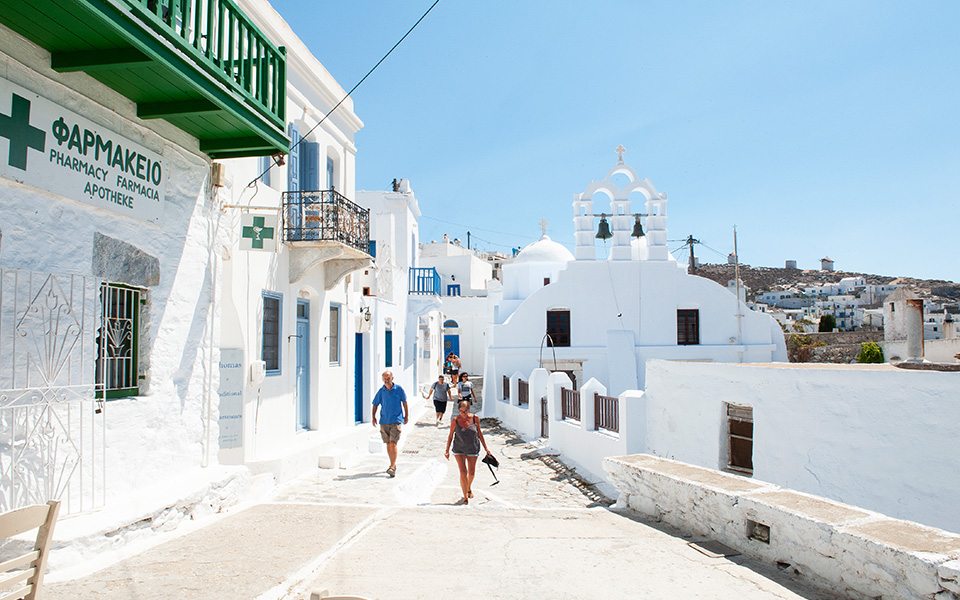
The ancient Mesi Odos, Hora’s main street, lined with bars and meze restaurants.
© Julia Klimi
At the center of the island, dazzlingly white and distinguished by its fortress-like architecture, Hora has been inhabited since the 7th century BC, when residents moved to higher ground to escape pirate raids. From here – and from even higher up, at the Castle – there are sweeping views over land and sea.
“The main alley, the ancient Mesi Odos, which also served as the marketplace, is still known by the same name and remains the settlement’s most vibrant thoroughfare,” says Amorgian archaeologist Lila Marangou. Stop at one of the lively meze restaurants and bars, popular with younger crowds and known for their distinctive atmosphere. At the end of the street, Loza Square, with its namesake café, is the ideal place to linger over conversation accompanied by the local liqueur, psimeni raki.
A visit to the Archaeological Museum of Hora is a must. Housed in the 16th-century Gavras Tower, its collection includes finds dating from the Bronze Age to the end of antiquity. Highlights include exceptional sculptures and funerary reliefs, as well as a child’s burial complete with grave goods. Until October 31, the museum is open Wednesday through Monday, from 8:30 am to 3:30 pm.

The refectory of the Holy Monastery of Panagia Hozoviotissa, founded in the 9th century to house an icon of the Virgin Mary said to have been found in Hozova, Palestine, during the Iconoclast period.
© Julia Klimi
The island’s Byzantine past reveals itself at the Monastery of Panagia Hozoviotissa, perched on a cliff 300 meters above the sea. It is one of the most striking monasteries in the Aegean, thanks to its dramatic vertical structure and eight levels clinging to the rock face. Built in the 9th century, it was renovated by Emperor Alexios Komnenos and experienced periods of great prosperity, as evidenced by the rare relics and manuscripts preserved there. Today, three monks live at the monastery permanently. It is reached via a staircase carved into the rock, and the view from its balcony is breathtaking. Visiting hours are 8:00 am-1:00 pm and 5:00-7:00 pm.

Katapola is the island’s main natural harbor.
© Julia Klimi
Leaving Hora and driving southwest toward Kato Meria, you pass through farmland and grazing country, with goats appearing suddenly on the hillsides and unexpected gusts of wind bringing welcome relief from the heat. The fertile valley has been cultivated continuously since antiquity, and in recent years organic farms have multiplied, supplying local restaurants with high-quality produce.
The next stop is Ancient Minoa, above picturesque Katapola, the island’s main natural harbor, which has played a crucial role since the late 5th millennium BC. Human presence at Minoa dates to the 5th millennium BC, while the settlement flourished from around 1100 BC onward. From the 3rd millennium BC, moreover, Amorgos, together with the Small Cyclades, was one of the most important centers of Cycladic civilization. Back in Katapola, unwind at the waterfront bars and fish tavernas.

Emerald waters at the beach beside the port of Aegiali.
© Julia Klimi
At the far end of Aegiali Beach, a wide path leads to three more beaches: Levrossos, Psili Ammos and Hochlakas. The first is sandy and shaded by tamarisk trees and tends to attract a fair number of visitors; the second is much quieter, as it takes around 20 minutes to reach on foot; the third is popular with nudists and hippies. All three can also be reached by small boats departing from the Aegiali pier. Aegiali is also home to the island’s only diving school.
“Amorgos has fascinating marine biodiversity and clear waters with impressive underwater formations,” explains owner and diving instructor Dimitris Synodinos. (For more information, visit Amorgos Diving Center.)

Aghia Anna Beach was made famous by Luc Besson’s The Big Blue, parts of which were filmed on the island.
© Julia Klimi
In the center of the island, east of Hora and below the Monastery of Panagia Hozoviotissa, lies the famous Aghia Anna Beach, with its namesake chapel, known around the world as a filming location for French director Luc Besson’s The Big Blue. Diving into its emerald waters, with their spectacular underwater scenery, is an unforgettable experience. Equally captivating are the coves with smooth rocks, such as Mourakia in the south, a favorite with younger visitors.
Further west, you’ll come across Navagio, a wild and rugged beach with a half-submerged shipwreck, while the large, sheltered, horseshoe-shaped Kalotaritissa is ideal for families with children. If you’re in the mood for a seaside excursion, boats depart from here for the islet of Gramvousa, with its sandy beach and no natural shade – the perfect excuse to spend hours in the water.

At Horeftis, a grocery store-cum-taverna in Tholaria, traditional music, food, drink and dancing go into the early hours of the morning.
© Julia Klimi
At the entrance to Hora, the historic Parvas meze café is renowned for its meatballs with fried potatoes, beef braised with tomatoes, and grilled cuttlefish stuffed with onions; the vegetables come from the owners’ own garden. Parvas himself passed away after becoming the subject of a documentary film, but Christos and Niki continue to preserve the spirit and atmosphere of the place.
In Katapola, on the harbor promenade, Prekas’ Nautilia, a café, beer hall and restaurant that has been operating since the 1950s, has walls covered with paintings of ships, portraits and old television sets. Here, we enjoyed excellent pan-fried octopus prepared by Mrs Zoi, boiled amaranth greens, fried small fish and smoked herring salad. You can also buy ferry tickets for the Small Cyclades here. A little further along, Mouragio fish taverna serves lobster pasta and kakavia, the traditional Greek fisherman’s soup, upon request.
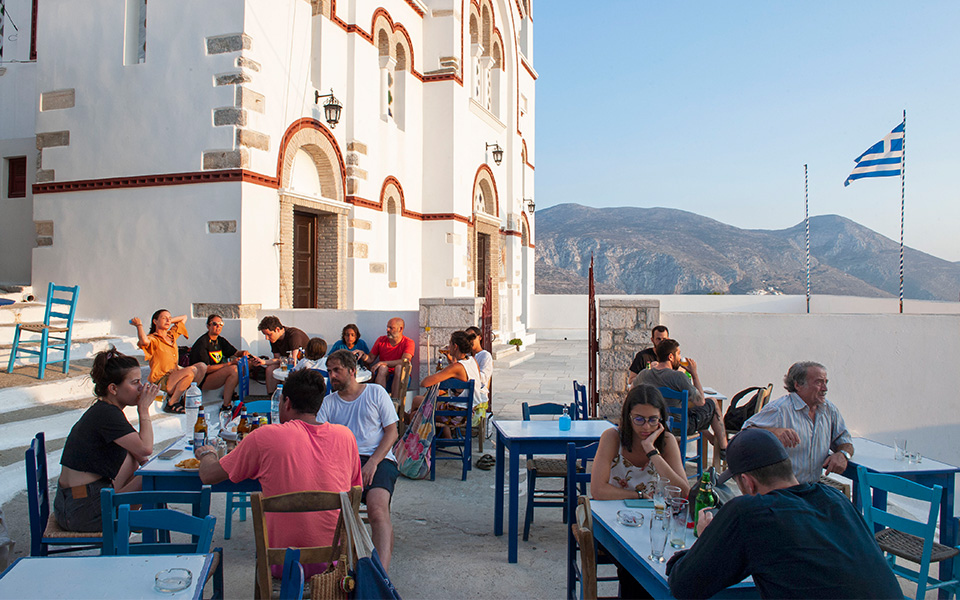
Kali Kardia café-meze restaurant in Tholaria serves delicious meatballs and salads.
© Julia Klimi
In Aegiali, the historic To Limani tis Kyra Katinas taverna serves delicious patatato – goat with potatoes slow-cooked in an earthenware pot – as well as kakavia, wild chard pie, fava bean fritters and exceptionally fresh fish.
At nearby Moschoudaki in Lagada, a beautiful traditional café with a long history, you can enjoy home-cooked dishes and savory pies. In Tholaria, at Kali Kardia, Sofia and her daughter serve seasonal dishes with wild greens, oven-roasted lamb with lemon, meatballs and salads. The tastiest Amorgian fava – made from katsouni, a local variety of field pea – can be found in the square by the Church of Aghioi Anargyroi, while the Seladi bar, a little further uphill, offers spectacular sunset views.
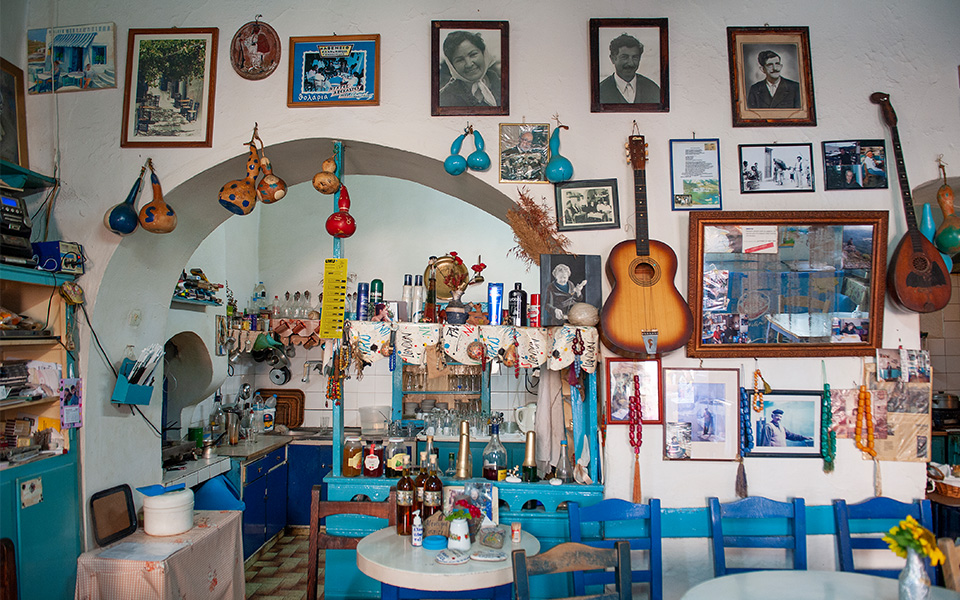
Kali Kardia café-meze restaurant in Tholaria.
© Julia Klimi
At Horeftis, the grocery store-cum-taverna run by Anargyros Nomikos, you’ll find some of the island’s most lovingly prepared traditional dishes. It was here that our journey drew to a close with an authentic Amorgian celebration that lasted into the early hours of the morning alongside locals from Tholaria drinking steaming rakomelo and psimeni raki, while others played the lyra and lute.
Finally, at the southern end of the island, in Arkesini, Ston Pyrgo taverna produces 99% of the ingredients it uses – reason enough to make the journey to Amorgos. With some 15,000 goats and sheep grazing on the island’s mountains and feeding on all manner of wild herbs, it is little wonder the goat meat is so flavorful. Here, however, they also know exactly how to cook it. The Greek salad is equally memorable, as are the fresh capers, their heavenly homemade xinomyzithra cheese, dolmades, giaprakia, stuffed zucchini blossoms, all kinds of wild mountain greens, an array of pies made with homemade phyllo, and, of course, the wine…
Locals share their memories of behind-the-scenes...

In Homer’s “Odyssey,” the journey is...
As its historic estates fade and...

In the Oinousses island group in...