Discover 4 of the North Aegean’s Most Charming...
From Lesvos and Chios to Ikaria...


Alypa Beach
© Shutterstock
As the road leaves Gythio behind and winds south into East Mani, the landscape gradually begins to change. The long sandy beaches of the Laconian Gulf give way to small pebble coves. Vegetation grows sparse until only hardy shrubs cling to the dry-stone walls. Stone tower houses, silent sentinels of another era, begin to dominate the horizon, and tiny settlements – often little more than a cluster of stone homes – seem suspended between past and present.
On the east side of Inner Mani, the landscape has been shaped by stone and light for centuries. Life in this rugged corner of the Peloponnese has always been demanding, and the people of Mani learned long ago to adapt to, and live in harmony with, their surroundings. Today, nearly all of the villages have been designated traditional protected settlements, preserving their distinctive architectural character.

The Skopa Peninsula
© Eleni Vlachou
At the point where lush Laconia gradually gives way to Mani’s rugged terrain lies the village of Kotronas. Even its name reflects the element that has shaped the area’s architecture and history: stone.
The word kotrones refers to the large rocks that abound here and have long served as the region’s primary building material. They were used not only for Mani’s iconic tower houses and countless centuries-old churches, but also for roads, boundary walls, and even the area’s modern bridges.

The Skopa Peninsula
© Eleni Vlachou
The heart of the village centers around its small harbor and beach, one of the few sandy stretches along this section of coastline. Yet Kotronas extends well beyond the waterfront and remains one of the largest settlements in the region.
Overlooking the shore stands the statue of Captain Nikiforos, the nom de guerre of Macedonian fighter Ioannis Demestichas, who hailed from Mani. Just past the village lies the Skopa Peninsula. In striking contrast to the austere landscape surrounding it, Skopa is covered with lush vegetation.

The small chapel of Aghios Nikolaos
© Eleni Vlachou
Its history stretches back to antiquity. The small chapel of Aghios Nikolaos was built atop the sanctuary of Artemis Issoria, and archaeological discoveries have identified the site with ancient Teuthrone, one of the most important cities of the League of Free Laconians. Thanks to its strategic position on the Laconian Gulf, the city prospered for centuries.
Today, Skopa is an ideal place to pause beneath olive trees that reach all the way to the sea. Its twin beaches, covered with black pebbles, are known for their calm, warm, crystal-clear waters. The area was also home to Roman baths, the remains of which can still be seen today.

Alypa Beach
© Eleni Vlachou
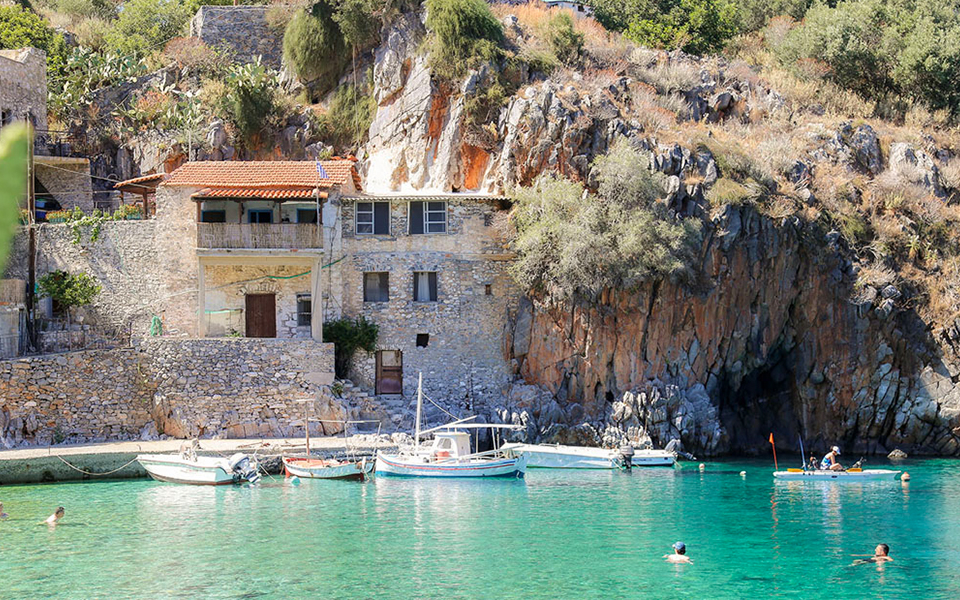
Leaving Kotronas behind, the road climbs the hillside, offering sweeping views across the Laconian Gulf before descending once again toward the coast and the village of Alypa, one of Eastern Mani’s most distinctive seaside settlements. The tiny cove, traditional stone houses, and imposing tower houses standing like sentinels above the sea create an unforgettable setting that served as the backdrop for an international film production in the 1980s.
Alypa Beach
© Eleni Vlachou
The small beach, covered with large pebbles, is washed by shimmering emerald waters. There are no sunbeds or umbrellas here, allowing visitors to enjoy the landscape in its most natural state. Just above the beach, a traditional fish taverna serves seafood brought in daily by local fishing boats, with dishes rooted in the culinary traditions of Mani.
Aghios Kyprianos
© Eleni Vlachou
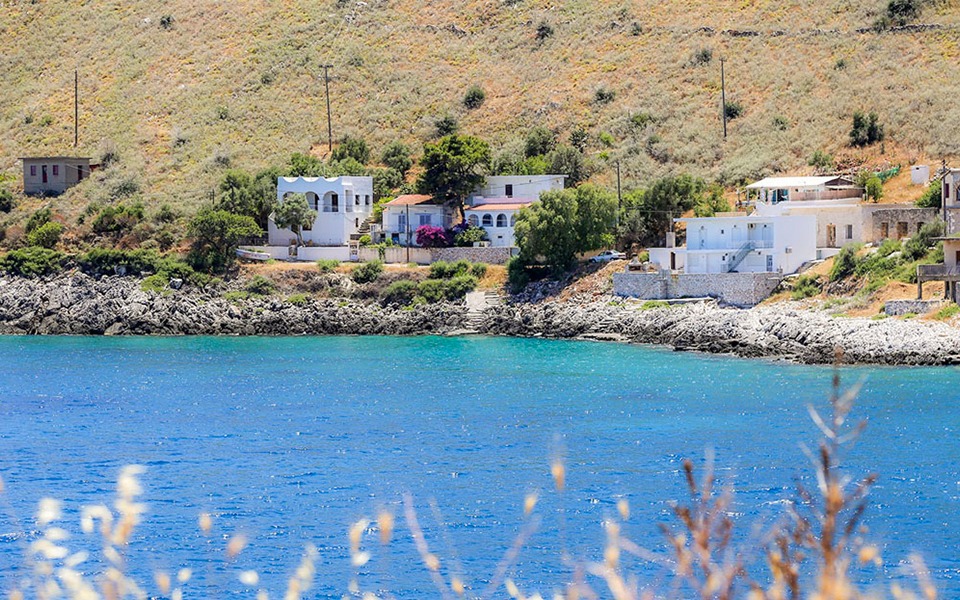
While the main road continues toward the better-known villages of Inner Mani, a short detour leads to Aghios Kyprianos, one of East Mani’s lesser-known gems. The village appears almost unexpectedly on the final bend of the road. Built around a sheltered cove, its stone houses descend toward the waterfront in the shape of a natural amphitheater. The earthy tones of the buildings blend seamlessly with the surrounding hillsides, creating a scene that feels quintessentially Maniot.

Ampelos
© Eleni Vlachou
Although the village itself has a small pebble beach, most visitors continue to Ampelos (also spelled Ambelos). The final stretch is narrow, unpaved, and requires careful driving, but the reward is a secluded beach with crystal-clear waters. Largely untouched by mass tourism, Ampelos remains a peaceful escape, with only limited facilities operating during the peak summer season.
From Lesvos and Chios to Ikaria...
Who says exploring ancient Greece has...

These are Greece's nominees for this...
In the villages of Pogoni, autumn...