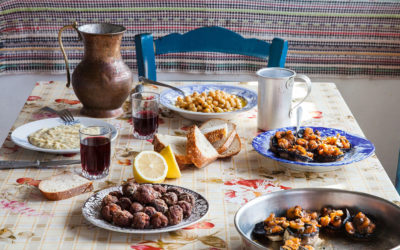
Don Dines in Athens: O Skoufias, Pangrati
A hidden gem in Pangrati where...

© George Drakopoulos, Food styling: Tina Webb

Chef: Manolis Asnaloglou

Preparation & Cooking time: Preparation: 1 hour Cooking: 1 hour 20 minutes Resting time: 2 hours

Serves: 30-35 pieces
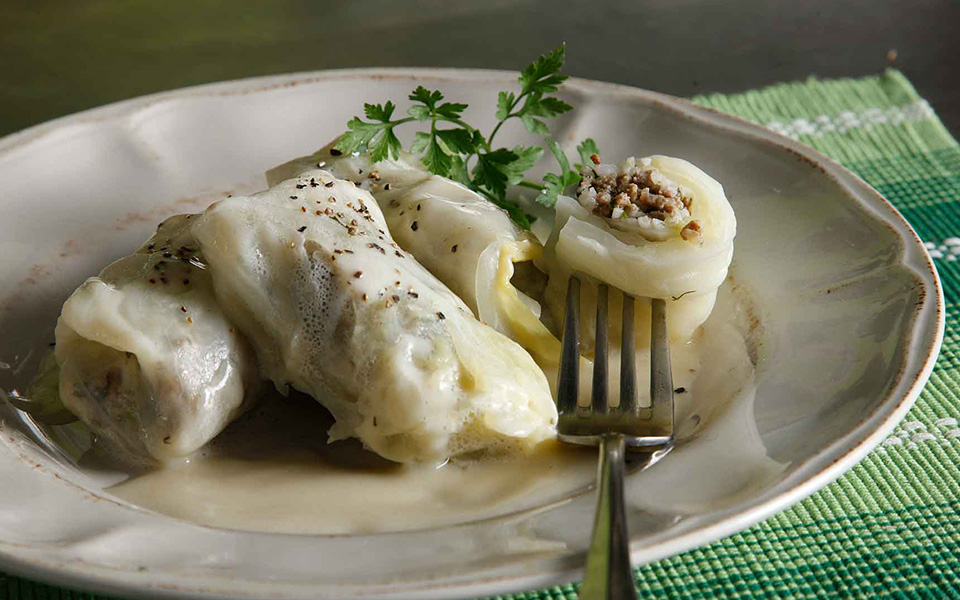
Manolis Aslanoglou shares the secrets of this classic celebratory dish, which can be served as a main course. He has chosen to make cabbage rolls stuffed with minced meat and rice instead of just rice.
See how to make cabbage rolls with egg-lemon sauce step by step:
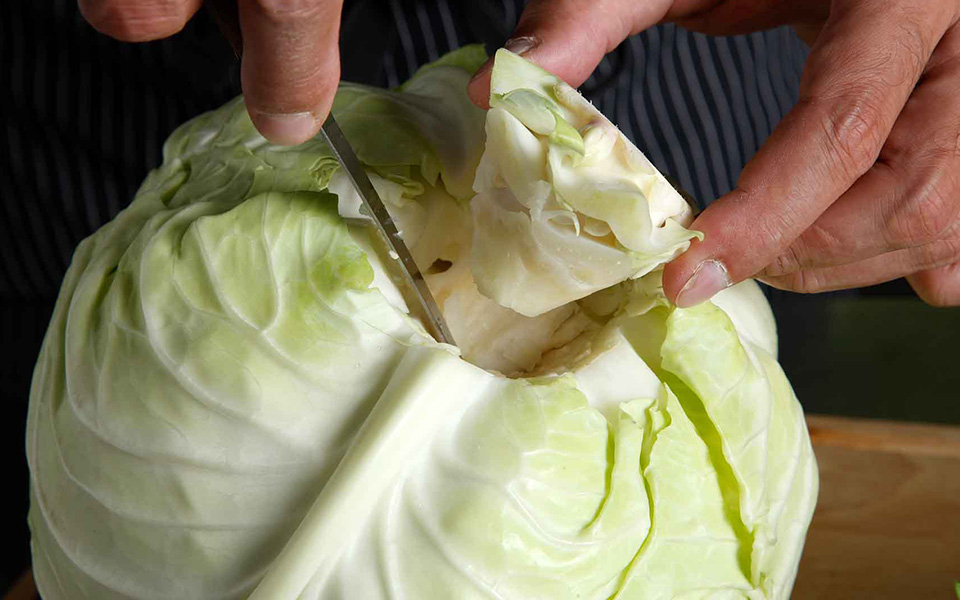
Using a small, sharp knife, remove the hard core from the cabbage by cutting out a cone-shaped section. Check the opening and remove any remaining tough inner core if necessary.
Remove one or two layers of the outer cabbage leaves, as they are usually damaged. Even if they are intact, it is still best to remove them, as they are quite tough. No matter how long they boil, they tend to tear during wrapping. Set them aside rather than discarding them, as they will be used later.
Place the cabbage in a large pot with the opening facing down. Boiling begins from the bottom, and this allows the water to enter through the opening and soften the inner leaves at the heart of the cabbage at the same rate as the outer ones. Otherwise, the outer leaves may overcook and disintegrate while the inner ones remain undercooked.
Add enough cold water to cover about two-thirds of the cabbage. Do not overfill the pot, as the water will spill over once it boils and the cabbage may move around. You will turn the cabbage during cooking so it cooks evenly. Do not place the cabbage in boiling water, as the outer leaves will soften and fall apart before the inner leaves are ready.
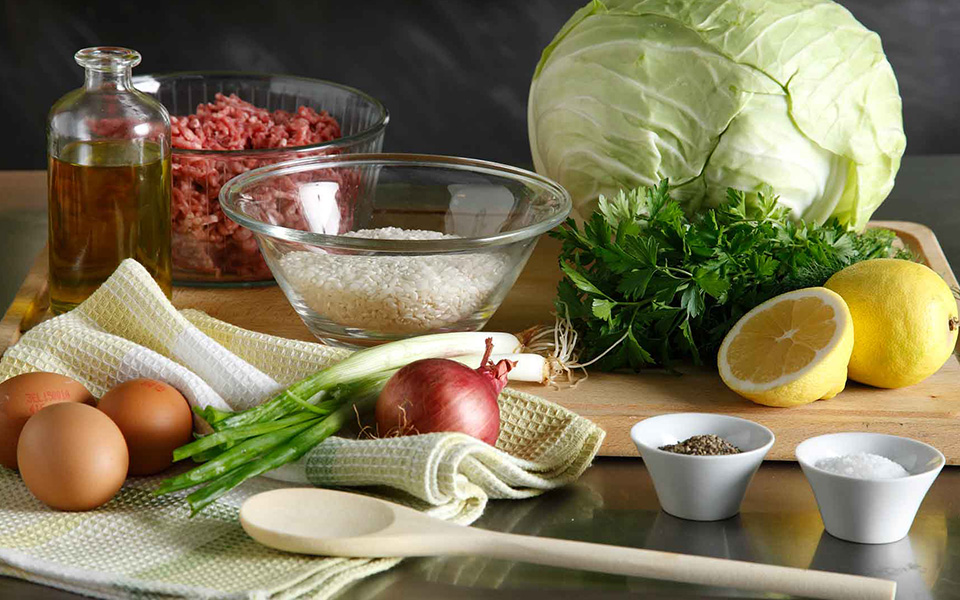
For the egg-lemon sauce (avgolemono)
© George Drakopoulos, Food styling: Tina Webb
© George Drakopoulos, Food styling: Tina Webb
Add a heaping tablespoon of coarse salt and place the pot over medium heat. Do not cover the pot, as covering blanched vegetables causes discoloration. The cabbage used here (2.7 kg) required 15 minutes from the minute the water began to boil.
Meanwhile, place a large pot over high heat, without oil, and let it get very hot. Add the minced meat and bay leaves. Sauté the meat in its own fat, stirring so it breaks up into separate grains and becomes grayish.
Continue sautéing until most of the liquid released by the meat has evaporated. Season with salt and pepper, then add about 90 g of the olive oil. Cook until the meat is well browned.
Add the onion and continue sautéing for 4-5 minutes, until soft and glossy. Add a little water if needed, then remove from the heat.
By the time the minced meat is ready, the cabbage will have boiled for 15 minutes. Carefully turn it over, taking care not to burn yourself or damage the leaves. Add boiling water so it is again covered by about two-thirds, and continue boiling for another 10 minutes.
© George Drakopoulos, Food styling: Tina Webb
At that point, check whether the cabbage is properly cooked by inserting a thin knife into its center. It should slide in easily. If necessary, boil a little longer, turning the cabbage again so that the opening faces the bottom of the pot.
Drain off more than half of the boiling water and replace it with cold water. This stops the cooking and prevents burns if the cabbage slips back into the pot, a mishap Manolis recalls well and insisted we mention.
Lift the cabbage using two large slotted spoons, spatulas, or any tool that won’t damage it. Place it in a baking pan and allow to cool completely before separating the leaves. This will take about 30 minutes.
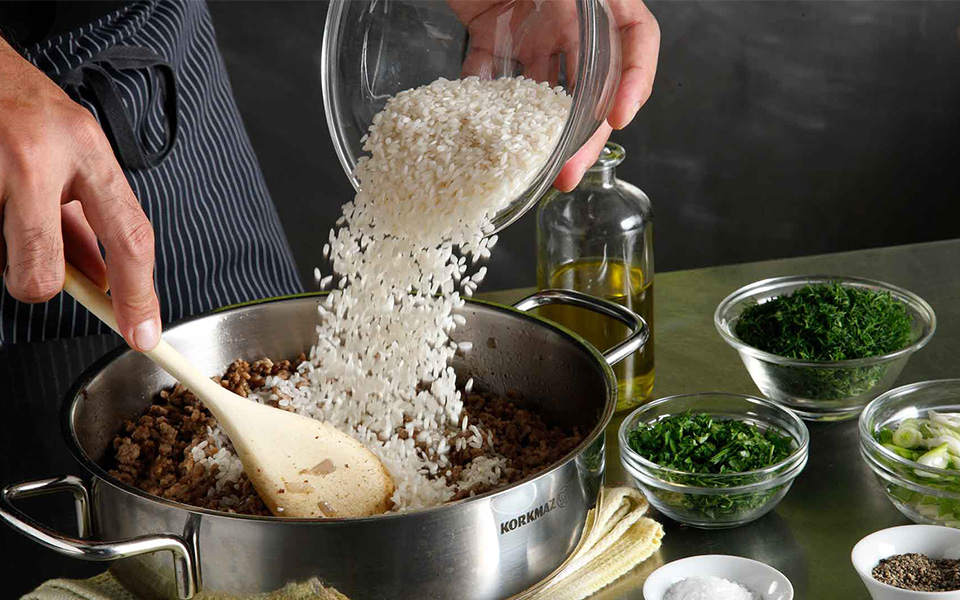
Prepare the filling by removing the bay leaves from the meat and adding the raw rice. Mix well; the rice does not need to be sautéed, as it will cook fully during simmering.
© George Drakopoulos, Food styling: Tina Webb
Add the dill, parsley, spring onions, 60 g of olive oil, allspice, zest, salt (about 1 level teaspoon), and freshly ground pepper. Mix thoroughly.
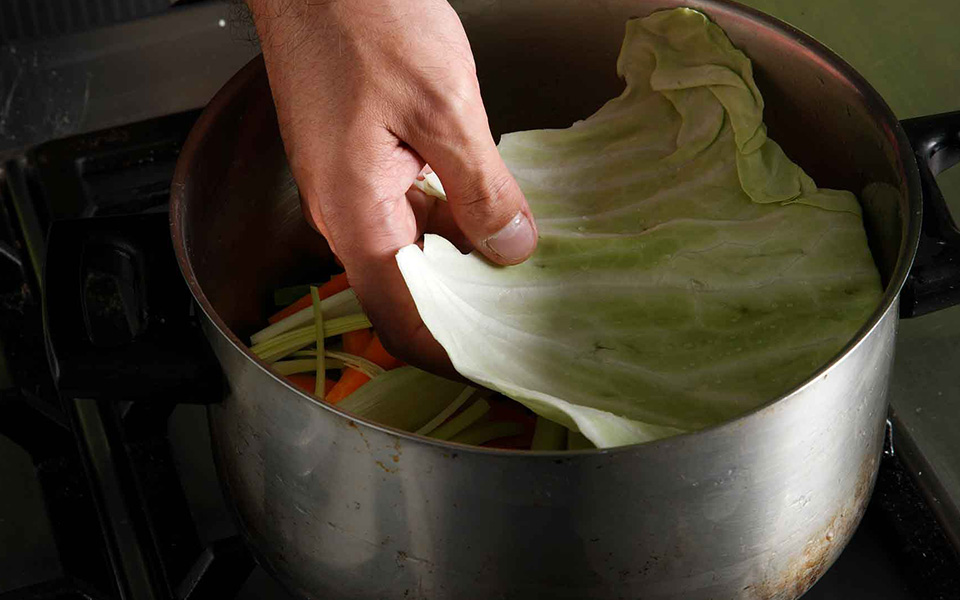
Halve the leek lengthwise, then quarter it lengthwise and cut into small pieces. Halve the carrots lengthwise and slice them into batons.
Spread the vegetables in a deep pot to form an aromatic base, as the cabbage rolls will simmer in this broth. Add the reserved herb stems.
Cover the vegetables with the outer cabbage leaves you set aside earlier to create an even surface for arranging the rolls.
© George Drakopoulos, Food styling: Tina Webb
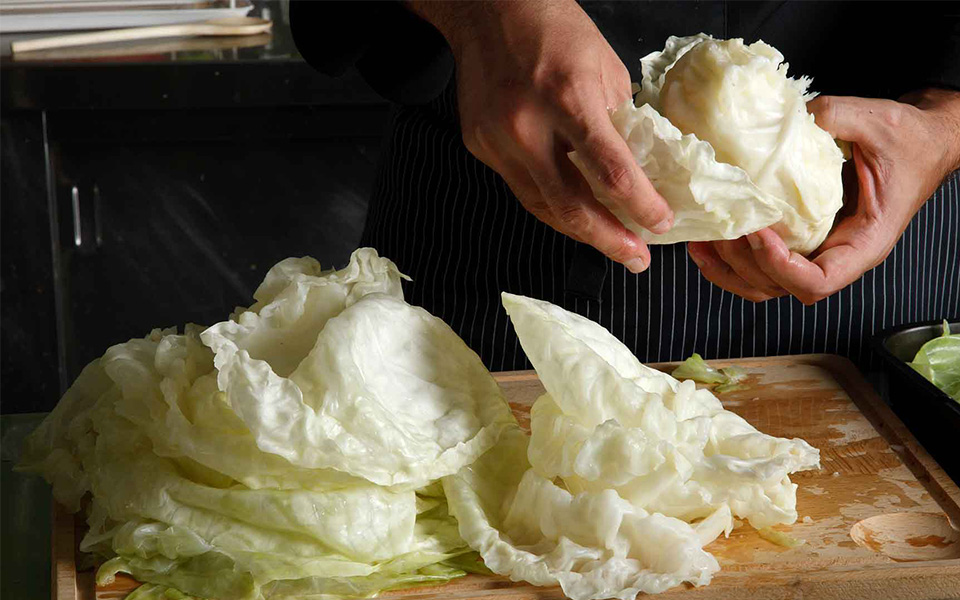
Carefully separate the cabbage leaves, starting with the larger outer ones. Loosen the edges gently with your fingertips to avoid tearing. Continue separating all the leaves, including the small ones near the core, which can be used as patches if needed.
Palm-sized leaves can be used as they are and hold a generous amount of filling. Thin outer leaves can also be used whole, as they require multiple turns when rolling. Larger, thicker leaves should be cut in half or into three-quarters. Trim off curly edges to make wrapping easier.
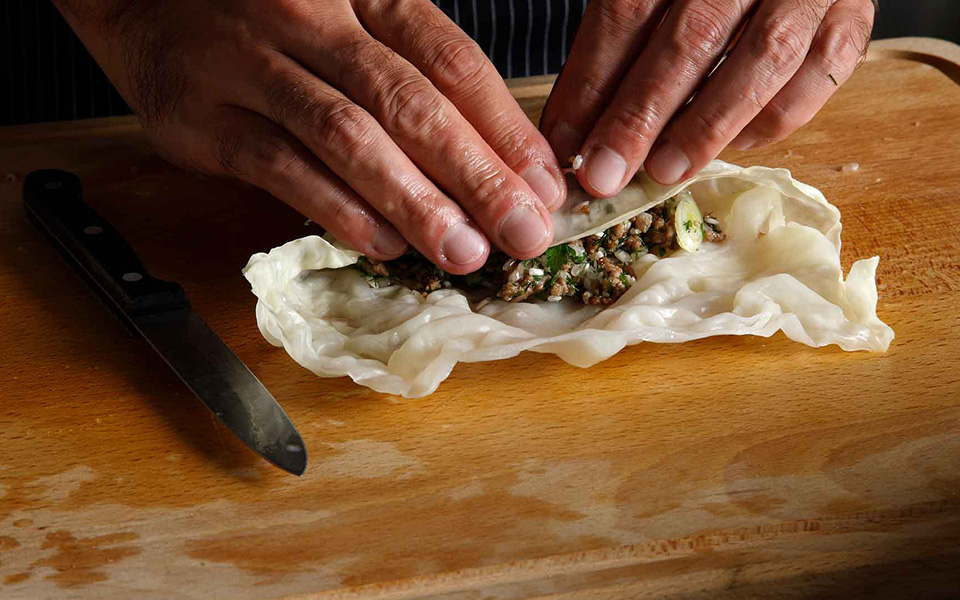
Place a cabbage leaf on the work surface with the curved side facing down, so you follow its natural shape when rolling. The tougher veins will end up on the outside and cook properly. Place one generous tablespoon of filling near one end.
© George Drakopoulos, Food styling: Tina Webb
© George Drakopoulos, Food styling: Tina Webb
Cover the filling with the wide end of the leaf, fold both sides inward, and roll forward, keeping the roll tight.
Alternatively, place the filling along one side of the leaf and roll it into a log without folding in the sides. After rolling, fold the ends inward. This method usually produces larger rolls.
Whichever wrapping method you choose, gently press each roll in the palm of our hand so it holds its shape. Arrange the cabbage rolls in layers, close together but not tightly packed, to allow the liquid to circulate.
Use any trimmed leaf pieces by overlapping them to form larger leaves. These may not be perfect rolls, but they are useful for testing whether the rice has cooked. Any leftover filling can be cooked separately with a little water to make a pilaf.
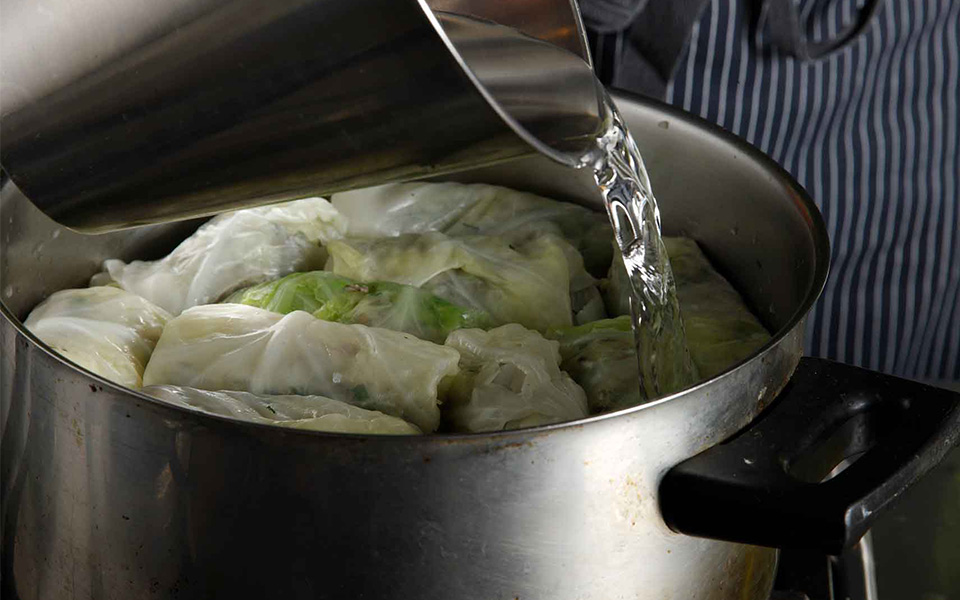
Add cold water to the pot, enough to cover the rolls by 2–3 cm. Add the remaining olive oil (150 g) and cover the rolls with a plate to keep them in place. Press the plate down so the liquid reaches halfway up its sides.
© George Drakopoulos, Food styling: Tina Webb
Place a heavy object on the plate to prevent movement during cooking. Set the pot over high heat; once the liquid boils vigorously, reduce the heat and cook uncovered for 30-40 minutes, until the rice is fully cooked and creamy. Taste a roll to check.
To finish with egg-lemon sauce, remove the pot from the heat and pour off the broth. Measure out 1 liter and reserve the rest for other uses.
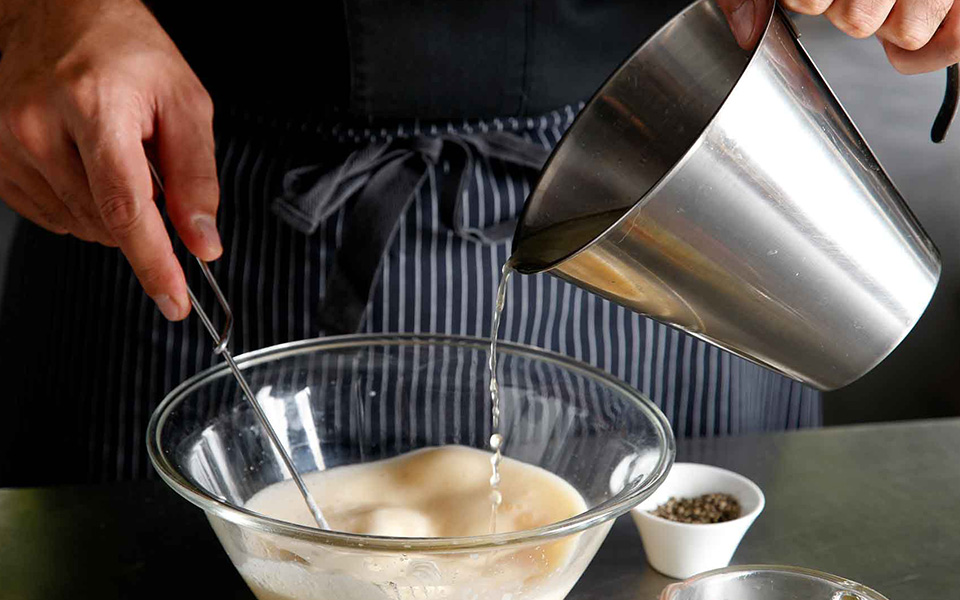
Whisk the eggs until frothy, add the lemon juice, and whisk until smooth. Gradually add the hot broth, whisking constantly. Season the avgolemono with salt and pepper.
Pour the egg-lemon sauce over the cabbage rolls and gently shake the pot so the sauce spreads evenly. Return the pot to very low heat and leave it until the sauce thickens slightly. Do not let it boil. If you have a thermometer, the sauce temperature should not exceed 80°C.
Let the dish rest for about 30 minutes. Transfer the rolls to a serving platter, spoon the sauce over them, and finish with freshly ground black pepper. Serve warm or at room temperature.
If you’re not finishing them with egg-lemon sauce, leave them in the pot for 1-2 hours to reach room temperature. Serve on a platter and drizzle with fine early-harvest olive oil. Accompany with yogurt.
Originally published in Greek at gastronomos.gr.
Tasty variations: Depending on the herbs you use, you can create very different versions of the dish.
A hidden gem in Pangrati where...
Discover the rich flavor of homemade...

A traditional honey-and-cheese pie from Mykonos,...

In Drapetsona and Keratsini, family-run kebab...