30 Wineries Across Greece to Explore (Map Included)
Discover Greece’s winemaking heritage with tastings,...


Grape vines in Nemea.
© Shutterstock
Wine has been part of life in Greece for thousands of years. Archaeological evidence shows that grapes were being cultivated and wine produced here as early as the Late Neolithic, c. 4500 BC, while the drink became deeply embedded in the religious and social life of the Aegean Bronze Age. The Minoans – master seafarers and traders – carried their wines and winemaking traditions into a wider world, forging connections with Egypt and communities across the eastern Mediterranean.
At the heart of this ancient wine culture was Dionysus, god of wine, revelry, ecstatic celebration – and, when the occasion demanded it, madness. His presence is attested as far back as the Mycenaean period, when Linear B tablets – the earliest found at Pylos – record offerings to the god. Centuries later, vase painters brought the world of Dionysus vividly to life, depicting grape pressing, wine production, and “symposia”: the leisurely, aristocratic drinking parties where wine flowed freely and conversation, music, and merriment could run late into the night.
The ancient Greeks believed Dionysus had taught humans the secrets of cultivating the vine and making wine. It was a divine gift – and one they clearly knew how to enjoy.
Today, you can follow that ancient tradition across Greece, raising a glass in vineyards and wineries set amid landscapes where archaeology, mythology and winemaking still intertwine.
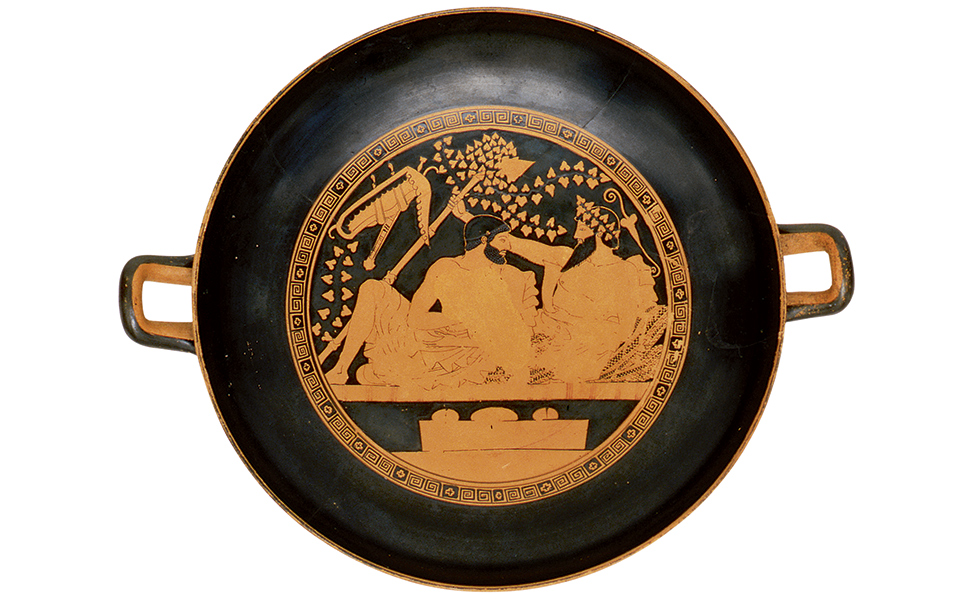
Red-figure kylix, depicting Dionysus and Herakles at table, 5th c BC. (National Archaeological Museum, Athens)
The vineyards around Nemea in the northeast Peloponnese have an unusually compelling combination of wine and myth. This is the land of Herakles, who famously slew the Nemean Lion as the first of his Twelve Labors. Nearby, the Sanctuary of Zeus at Nemea hosted the ancient Nemean Games, while archaeologists have uncovered evidence of ancient vineyards, including vines planted in trenches, in the same landscape. Here, myth, religion and winegrowing have shared the countryside for millennia.
Today, more than 40 local producers work with Agiorgitiko, the region’s celebrated red grape, producing everything from fresh young reds and rosés to age-worthy wines and sweet dessert styles. The Nemea PDO, established in 1971, is based exclusively on Agiorgitiko, which takes its name from Aghios Georgios, the modern name of ancient Nemea. Some of Greece’s best-known producers have vineyards here, including Skouras, Gaia, Palivos, and Semeli.
For visitors, the ideal Nemea experience is to explore the ancient sanctuary before heading into the surrounding vineyards for a winery tour and tasting. During the annual Great Days of Nemea festival, held in early September, local producers open their doors to visitors, but wineries welcome wine lovers throughout the year, offering everything from guided tastings to relaxed glasses in vineyard courtyards.
Combine archaeology and wine tasting with our in-depth guide.
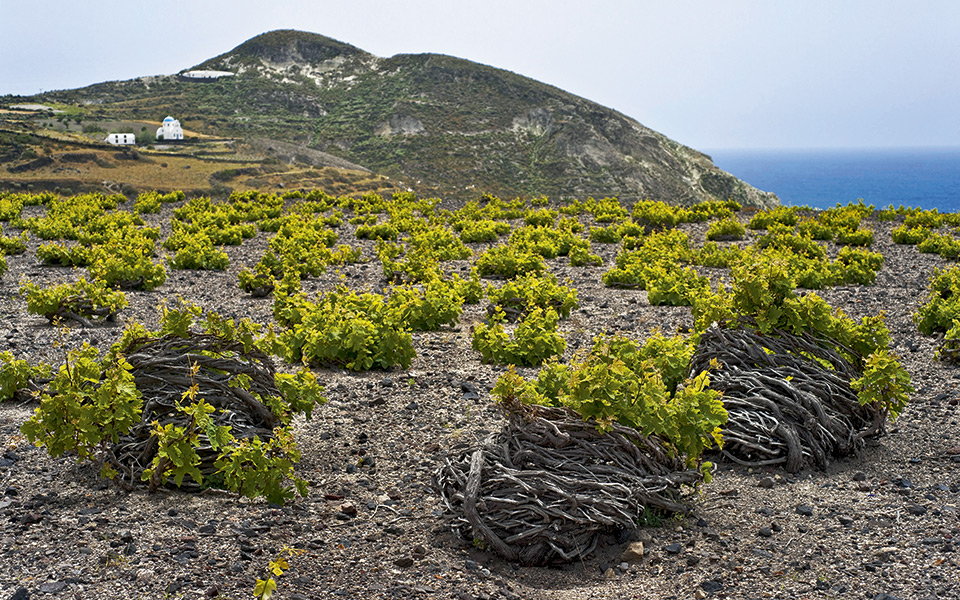
A veritable living monument of global cultural heritage, Santorini’s vineyards are the world’s oldest, with a root system that can be traced back four centuries.
© Shutterstock
On Santorini, wine has always been shaped by the rugged, windswept landscape. At Akrotiri, the Bronze Age settlement buried by the great Theran eruption, c. 1600 BC, preserves the remains of a remarkably sophisticated society, with multi-storey buildings, elaborate drainage systems, vivid frescoes, and evidence of far-reaching maritime connections. The catastrophe was so extraordinary that some have suggested it may have inspired Plato’s story of Atlantis – the so-called “Thera-Atlantis hypothesis.” The idea is roundly dismissed by scholars, but there is no question that the eruption dramatically transformed this corner of the Aegean.
What survived, however, was a remarkable viticultural tradition. Grapes were cultivated here long before Santorini became one of Greece’s most celebrated wine destinations.
Today, the island’s signature Assyrtiko thrives in conditions that would seem almost impossible for viticulture: volcanic soils, intense sunshine and strong Aegean winds. Traditionally trained into low, basket-like coils known as “kouloura,” the vines shelter their precious grapes from the wind. The mixture of basalt, ash, sand and pumice gives Santorini wines their distinctive mineral character and remarkable acidity.
Some of the island’s oldest and most prized vineyards are tended by generations of traditional growers, including Louros and Melissotopia in Pyrgos, Kavalieros in Vourvoulos, and Ai Giorgis in Megalochori. A winery visit offers the chance to taste the island’s famously crisp whites while gazing across the volcanic landscape that sustained Bronze Age communities – an ancient agricultural tradition in a spectacularly modern setting.
For more on this historic wine-producing island, click here.

In Naoussa – dubbed the “Greek Napa Valley” – wine is woven into the cultural landscape of Macedonia, a region long associated with Dionysus and the worship of the wine god.
© Shutterstock
In Naoussa – dubbed the “Greek Napa Valley” – wine is woven into the cultural landscape of Macedonia, a region long associated with Dionysus and the worship of the wine god. Ancient Macedonia was an important wine-producing region, and archaeological discoveries have revealed evidence of viticulture, wine production and consumption stretching back thousands of years. The Macedonians also acquired a reputation in antiquity for their enthusiastic drinking habits – including, on occasion, taking their wine neat rather than diluting it with water as was customary at the Greek symposium.
The star of the modern vineyards is Xinomavro, one of Greece’s most distinctive red varieties. Its name means “acid-black,” an apt description of a grape capable of producing wines with intense color, high acidity, and firm tannins, along with complex aromas that develop beautifully with age. It was here in Naoussa that Greece’s first red bottled wine, “Naoussa Boutari,” was produced.
The surrounding countryside is particularly rewarding to explore in autumn, when the vineyards take on golden and russet hues. A winery visit turns the history into something tangible: taste Xinomavro alongside local food, then explore the archaeological and cultural heritage of Macedonia that helped make wine such an important part of the region’s identity.
Click here to check out our guide to the region’s top 24 wineries.
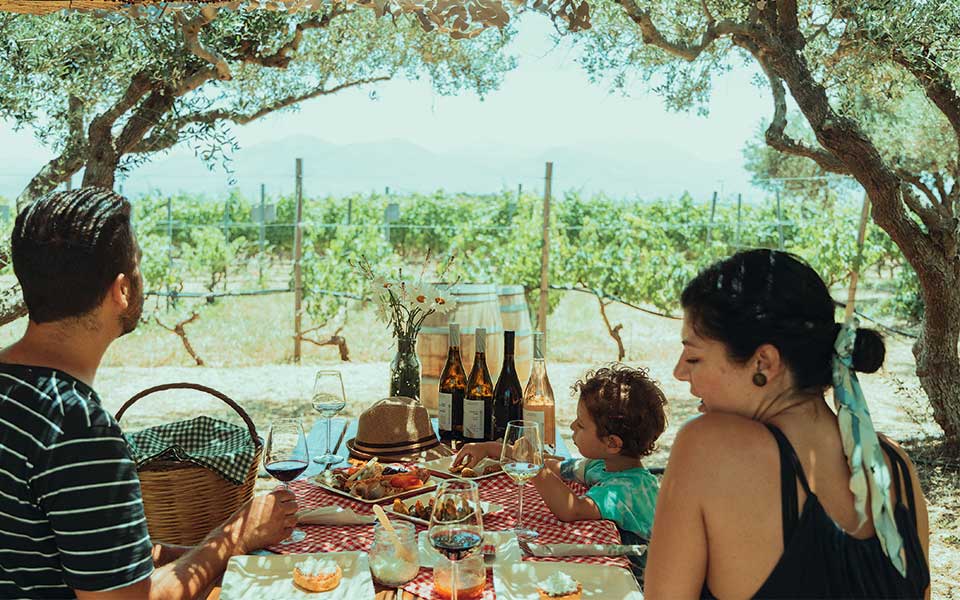
A picnic in front of the vineyards at Lyrarakis Estate, in Alagni.
With a winemaking tradition stretching back more than 5,000 years, Crete is one of Greece’s great wine destinations. The Minoans cultivated grapes and produced wine during the Early Bronze Age, c. 3200-2700 BC, and wine played an important role in their feasting and ritual culture. Centuries later, Greek mythology gave the island another connection to the god of wine. Dionysus took Ariadne as his wife after the Cretan princess, having helped Theseus escape the Labyrinth at Knossos, was abandoned by the Athenian hero on the shores of Naxos. In some traditions, Dionysus discovered her there and made her his bride, raising her to immortality among the gods.
Their union produced several children, including Oenopion, whose name means “wine-drinker,” and Staphylus, whose name is connected with the grape. Myth, it seems, had found another way to keep wine in the family.
Today, around 35 wineries belong to the Wines of Crete network, with many championing indigenous varieties including Vidiano, Vilana, and Kotsifali. At Douloufakis Winery, visitors can taste wines made from local grapes alongside international varieties, while Lyrarakis Winery offers tastings and vineyard picnics amid the mountains of Lassithi. The Lyrarakis family has also played an important role in reviving ancient Cretan varieties, including Plyto and Dafni.
For an experience combining wine and culture, Dourakis Winery, near Hania, offers tours and tastings alongside art events, exhibitions, and botanical gardens – as well as an ancient wine press.
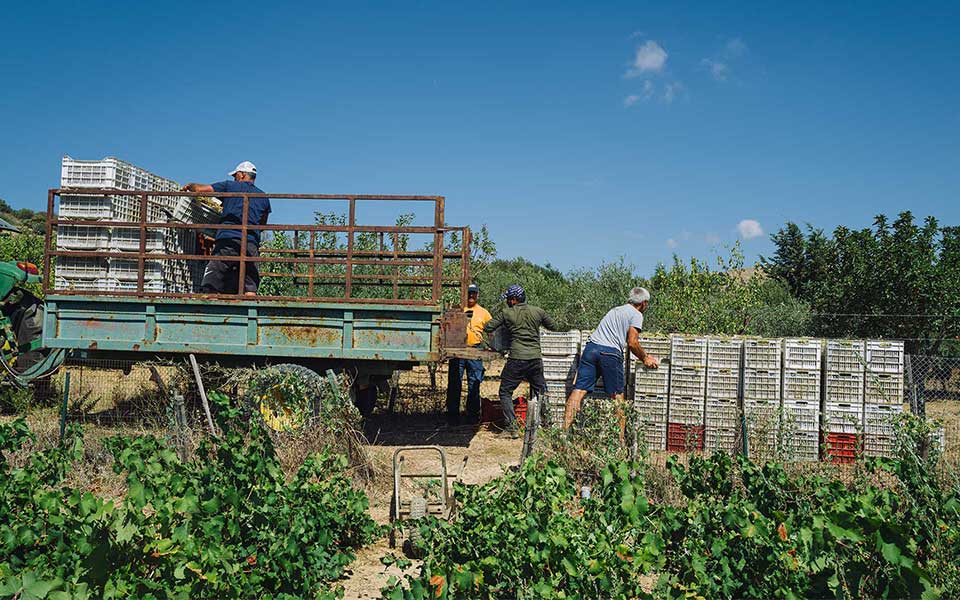
Remote Limnos in the northern Aegean has one of Greece’s most intriguing mythological connections.
© Michael Pappas
Remote Limnos in the northern Aegean has one of Greece’s most intriguing mythological connections. According to ancient tradition, the island was the home of Hephaestus, the god of fire and metalworking, who was said to have fallen here from Olympus after being cast down by Zeus. The island’s volcanic associations made it a fitting home for the divine blacksmith, whose forges were imagined burning beneath its earth.
Limnos also features prominently in the story of Philoctetes, the greatest archer in the Greek army. Stricken by a festering snakebite, he was abandoned on the island by the Greeks on their way to Troy, left to survive alone for ten years. When the Greeks discovered that Troy could not be conquered without his legendary bow and arrows, Odysseus was sent to bring him back – a mission dramatized in Sophocles’ tragedy “Philoctetes.”
Its vineyards, meanwhile, are particularly known for Muscat of Alexandria and Limnio, a 3,000-year-old red variety whose name is derived from Limnos itself. At Limnos Organic Wines, visitors can tour the vineyards and production areas before tasting organic sweet whites, rosés and sparkling wines. Garalis Winery offers another opportunity to discover local varieties, while the Limnos Agricultural Cooperative’s winery provides tastings accompanied by sweeping sea views.
Click here for our guide to wines on Limnos.
Discover Greece’s winemaking heritage with tastings,...
The Thessaloniki-born winemaker welcomes us to...
New research reveals that Greece’s most...

Experienced restoration specialists have completed the...