Women Olive Farmers in Greece: What Motivates Their...
From grove to global market, six...

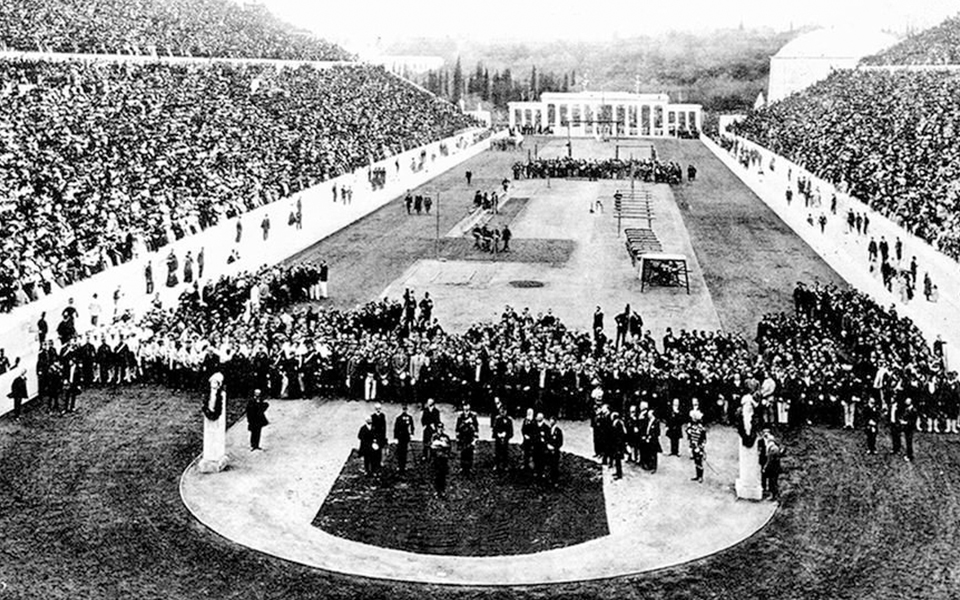
The opening ceremony of the first modern Olympic Games at the Panathenaic Stadium in Athens in 1896.
© Wikipedia
At one minute to five on the afternoon of March 29, 1896, 23-year-old water carrier Spyros Louis crossed the finish line at the packed Panathenaic Stadium, winning the first marathon of the modern Olympic Games in 2 hours, 58 minutes and 50 seconds. A total of 17 runners took part in the race (13 Greeks and four foreign athletes), all of them men. A woman of about 30 had also asked to compete, but the organizers refused to let her. Undeterred, she was determined to complete the same route on her own, even if it meant finishing outside the stadium.
And so, at 8 a.m. the following day, March 30, 1896, she stood at the starting point in Marathon, ready to cover the 40-kilometer distance to the Panathenaic Stadium. There would be no spectators to cheer her on along the way, nor any fellow athletes to compete against. She didn’t seem to mind.
Before setting off, she took an unusual precaution: She asked the mayor of Marathon, Dimitrios Koutsogiannopoulos, the local schoolteacher and the justice of the peace – three of the community’s most respected figures – to sign a handwritten document certifying her exact departure time. She knew that no official judge would record her attempt, so she wanted to make sure she had proof.
The woman’s name was Stamata Revithi, and her story is one of the most fascinating yet lesser-known episodes in the history of the first modern Olympic Games. Her attempt was documented in newspapers in 1896, but for decades it remained largely overlooked in official accounts of sporting history. Even today, researchers disagree on several important details of her life, particularly whether she was the same woman referred to as “Melpomene” in foreign publications of the time.

The Panathenaic Stadium during the first modern Olympic Games in 1896.
© Wikipedia
What we know about her personal life comes mainly from contemporary newspaper reports collected by the late Greek Olympic historian Athanasios Tarasouleas. According to his research, Revithi was originally from Syros and lived in Piraeus. Desperately poor and the mother of a 17-month-old child, she was about 30 years old when she decided to run the marathon. Tragically, she had lost her eldest child, aged seven, at Christmas in 1895. Newspaper accounts describe her as a slender woman, with a face prematurely aged by hardship and large, expressive eyes.
Her financial situation was dire. In search of work, she regularly walked long distances. According to an account, she once set out from Piraeus for Athens, carrying her young child in her arms because she could not afford transportation. Along the way, she encountered a young man on foot who asked where she was headed. When he learned that she intended to walk all the way to Athens, he was surprised and suggested, half-jokingly, that she test her endurance in the upcoming marathon.
The suggestion appears to have appealed to her. She believed she had the stamina to complete the race and that a successful performance might attract publicity and perhaps bring her some financial assistance. For a woman struggling to raise her child, the marathon offered a glimmer of hope that she might be able to change their circumstances.

A sketch of Stamata Revithi holding her shoes in her hand.
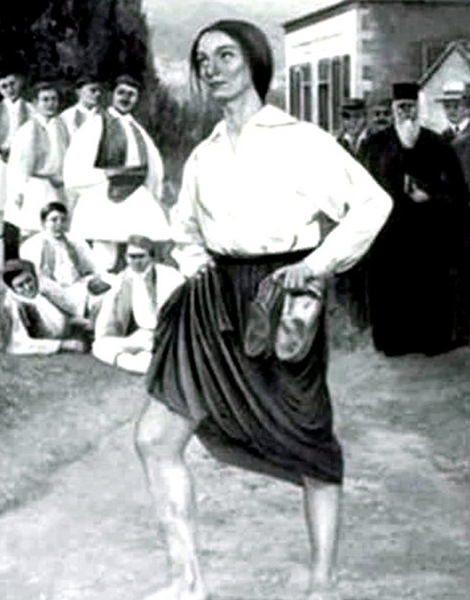
Marathon runner Stamata Revithi in a painting by T. Sotiropoulos.
The first modern Olympic Games were held in Athens from March 25 to April 3, 1896. Women, however, were excluded from the official competition program, reflecting prevailing attitudes toward organized sports at the time. French Baron Pierre de Coubertin, one of the leading figures behind the revival of the Games, remained opposed to women’s participation in the Olympics for many years. Nevertheless, Revithi approached the Organizing Committee and asked to compete.
Her request was denied. According to Tarasouleas, the organizers cited the fact that the registration deadline had passed, although the general exclusion of women from Olympic events would have made her official participation impossible in any case. Historical accounts suggest, however, that the organizers offered her a glimmer of hope, indicating that she might be able to compete at a later date alongside a group of American female athletes in a second, similar long-distance race.
On March 28, 1896, the eve of the big race, Revithi arrived in Marathon, convinced that she would find a way to run, perhaps in the alternative race she had been told about – which, however, never took place. She watched the athletes in their shorts and short-sleeved shirts as they prepared for the following day. The presence of a woman who wanted to run alongside them, despite having been denied permission, caught the attention of journalists, who began asking questions.
Did she really believe she could make it all the way to Athens? How long did she think it would take? She replied confidently that she could complete the route in about three and a half hours, perhaps even less.
A runner from Halandri joked that she might not reach the Panathenaic Stadium until all the spectators had gone home. Revithi immediately fired back. “Don’t underestimate us women when you men have been humiliated by the Americans,” she told him, referring to the American athletes who had defeated their Greek counterparts during the first three days of the Olympic Games. The runner remained silent.
Revithi also told journalists that she had no intention of eating anything on the day of the marathon. “But how will you have the strength to run?” they asked. “I’ve spent many nights without eating a thing, while breastfeeding my child,” she replied, adding that there were times when she could not even afford to buy bread.
The following morning, March 29, Revithi asked Giannis Veliotis, the elderly priest of Marathon, to say a prayer for her so that she might reach Athens quickly. He refused, explaining that he would bless only the officially registered athletes at the local Church of Aghios Ioannis. A few hours later, she watched as the men set off, while she remained behind at the starting line.
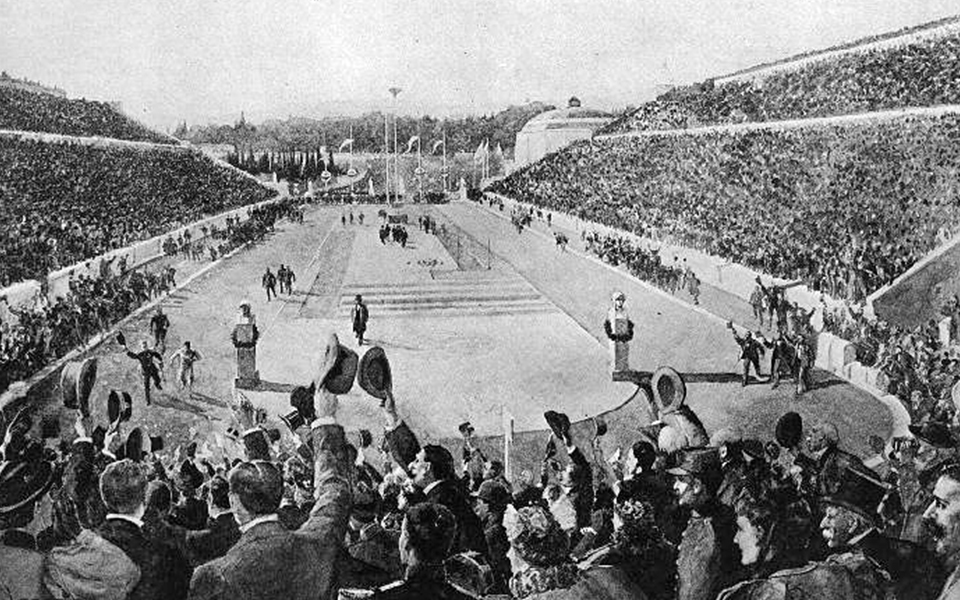
Spyros Louis entering the packed Panathenaic Stadium.
© Wikipedia
And so, at 8 a.m. the following day, after Spyros Louis had won the official marathon the day before, Revithi set off alone. She followed the same route to Athens as the male runners. Five and a half hours later, at around 1:30 p.m., she reached Parapigmata, an area near what is now Evangelismos Hospital.
She was drenched in sweat and covered in dust. There, she encountered several military officers, whom she asked to sign her document, confirming her arrival time. Her time of 5 hours and 30 minutes is recorded in historical accounts, although it was never recognized as an official Olympic result. Revithi never entered the Panathenaic Stadium and was not officially recognized as a participant in the race.
The officers asked her why she had put herself through such an ordeal. Her answer echoed what she had told the journalists: she hoped that her effort would help secure some assistance for her child. She also said that she intended to visit Timoleon Filimon, secretary-general of the Olympic Games Committee, to inform him of her finishing time. Before going, she took off her worn-out shoes, carried them in her hands and headed barefoot toward the center of Athens.
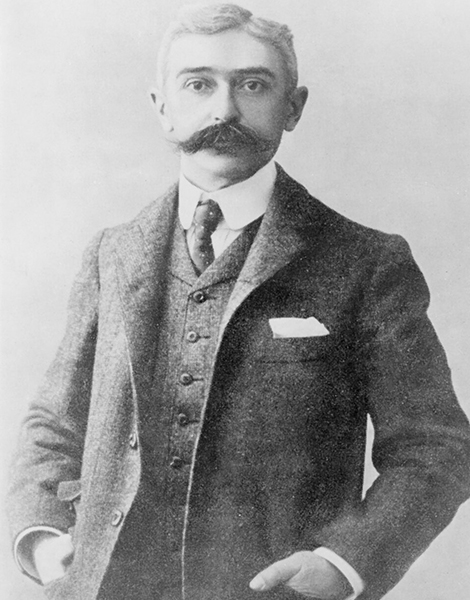
Baron Pierre de Coubertin, the founder of the modern Olympic Games.

The poster for the first modern Olympic Games, held in Athens in 1896.
The story became more complicated when foreign publications from 1896 mentioned a second female participant. The French-language newspaper Messager d’Athènes, in an article published on March 2 according to the Greek calendar then in use (March 14 according to the Western European calendar), reported that a woman had completed a trial run from Marathon to Athens in four hours and thirty minutes. According to the report, she had stopped only once, for about ten minutes, to eat a few oranges. Her name was not mentioned.
That same year, Hungarian Ferenc Kemény, a founding member of the International Olympic Committee, wrote about a woman named “Melpomene” who had covered the marathon distance in four and a half hours but had been denied entry to the official race. German sports historian Karl Lennartz, meanwhile, argued that the accounts referred to two different women: Melpomene, who had run before the Games, and Stamata Revithi, who made her own attempt on March 30.
Historian Athanasios Tarasouleas offered a different interpretation. He pointed out that Revithi’s name appeared repeatedly in contemporary Greek newspaper reports, while the name Melpomene was only found in foreign accounts. Moreover, the Greek newspaper Estia had mentioned that Revithi had also completed an earlier trial run, which could explain the reports about the unidentified woman. In his view, the two may have been the same person.
The question remains unresolved to this day. Olympedia, a database dedicated to Olympic history and statistics, notes that there is insufficient evidence either to confirm or rule out the possibility that the two women were, in fact, the same person.

The Panathenaic Stadium on the opening day of the 1896 Olympic Games.
© Wikipedia
The greatest gap in Revithi’s story concerns her life after March 30, 1896. We do not know whether she ever met Timoleon Filimon, whether she managed to secure any financial assistance or employment, or how she went on to raise her child. Neither the date nor the place of her death has been established.
Another 88 years would pass before the women’s marathon was included in the official Olympic program for the first time. On August 5, 1984, in Los Angeles, American runner Joan Benoit became the first woman to win an Olympic gold medal in the event. The first Greek female marathon runner to compete in the Olympic Games was Maria Polyzou, at the 1996 Games in Atlanta, Georgia.
For Stamata Revithi, however, that journey from Marathon to Athens meant far more than an athletic achievement. It represented a poor mother’s hope that her determination and effort might secure a better future for herself and her child.
Originally published in Greek at kathimerini.gr
From grove to global market, six...

From priestesses and poets to market...
Archaeology reveals powerful Iron Age women...