Did the Ancient Greeks Go Swimming?
The ancient Greeks may not have...


Dodona in Epirus, northwest Greece, is believed to the oldest Hellenic oracle, dating to the second millennium BC.
© Shutterstock
Exhausted and disheveled, Deinokles arrives at the sanctuary of Dodona in northwestern Greece after a long journey from Apollonia, an Illyrian city near the Adriatic coast. Standing beneath the rustling branches of Zeus’ sacred oak, he has an important question, one that has been weighing on his mind for months: which gods should he sacrifice to in order to father children?
This is no hypothetical dilemma. Sometime around 350-325 BC, a man called Deinokles really did ask it, and his question survives, etched on a small lead tablet (LOD 50).
For the ancient Greeks, such concerns were part and parcel of everyday life. While kings and generals famously consulted oracles about wars, political alliances and the fate of city-states, most ordinary folk had rather more personal matters to worry about.
Beyond the celebrated oracle of Apollo at Delphi, archaeologists have uncovered tantalizing clues to the questions people brought before the gods. Thousands of inscribed lead tablets discovered at Dodona offer an extraordinary glimpse into what ordinary Greeks wanted to know – and reveal just how familiar their hopes and anxieties remain.
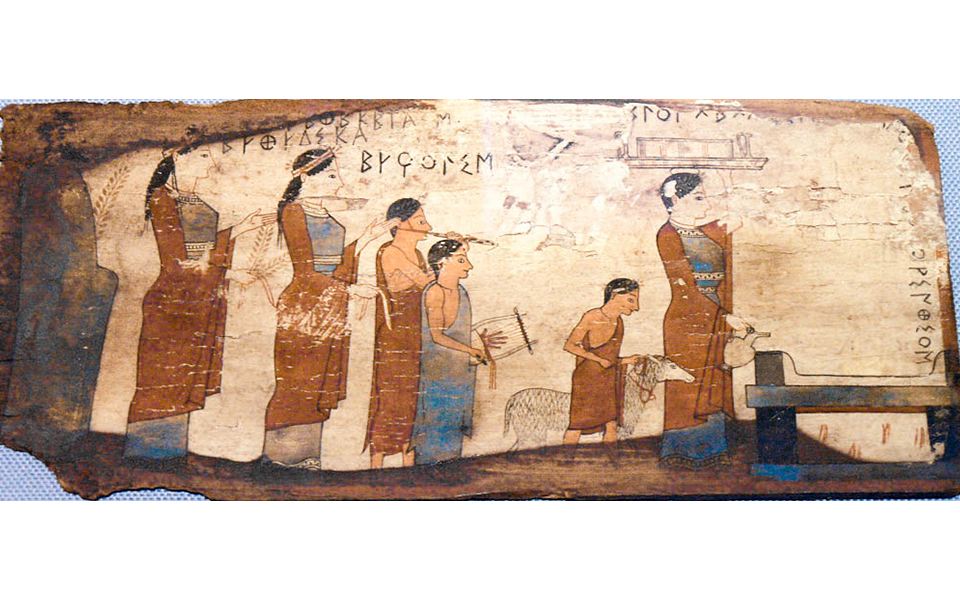
Sacrifice of a lamb on a Pitsa Panel, Corinth, 540-530 BC.
To the ancient Greeks, religion was deeply woven into the fabric of everyday life. The gods were not distant, abstract figures confined to smoke-filled temples and religious ceremonies; they were powerful, oftentimes unpredictable beings, believed to constantly meddling in the affairs of mortals. Their favor could bring prosperity and good fortune, while their displeasure might spell disaster. A successful harvest, a safe sea voyage, a healthy child or a thriving business could all be seen as blessings from above.
People turned to different deities according to their needs. Demeter was associated with agriculture and the fertility of the land, Artemis with childbirth and the protection of young people, while Hermes watched over travelers and merchants. Aphrodite held sway over love and desire, and Asclepius became an important figure for those seeking relief from illness.
Keeping on the gods’ good side involved animal sacrifices, offerings, prayers and active participation in religious festivals. But supplicants also wanted answers. Before undertaking a journey, entering a marriage or embarking on a business venture, they might seek divine guidance. The gods were not simply there to be worshipped; they were also consulted, their wishes sought and their favor courted.
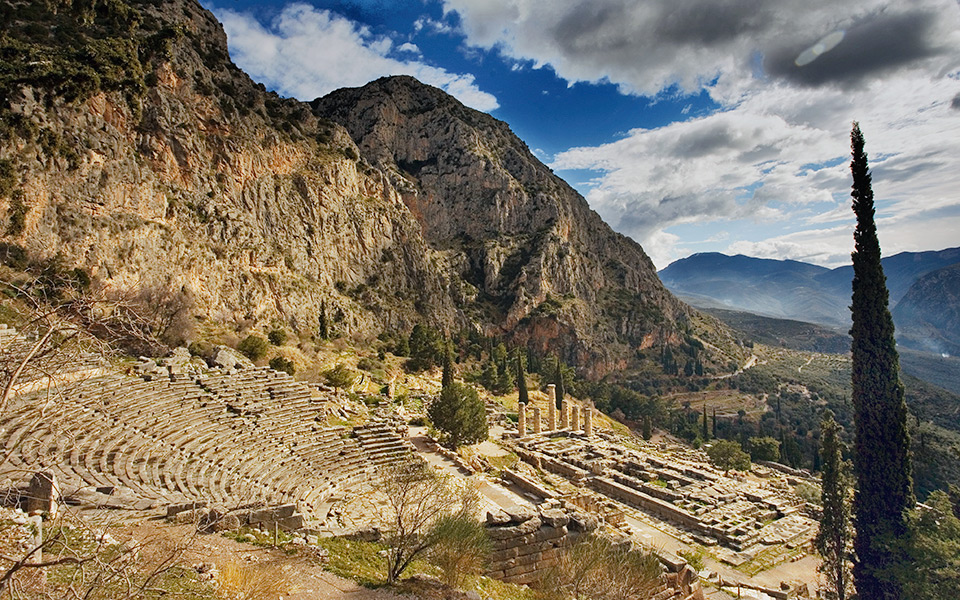
Delphi, home to the famous Oracle, was the most important Panhellenic religious sanctuary in the ancient Greek world.
© Perikles Merakos
Across the Greek world, sanctuaries offered different ways of communicating with the divine. At Delphi, Apollo delivered his prophecies through the Pythia, a prophetess who spoke in the god’s name. At Dodona, Zeus’ wishes were traditionally discerned through the rustling leaves of his sacred oak, the calls of birds and the chiming sounds of bronze cauldrons suspended nearby. Visitors could pose their questions orally or, increasingly from the late 6th century BC, scratch them onto small sheets of lead, which were folded and deposited at the sanctuary.
More than 4,000 of these votive tablets have been recovered, forming a remarkable collection of written testimonies to everyday life in antiquity. Most are housed in the Archaeological Museum of Ioannina, but one particularly revealing example can be seen in Room 36 of the National Archaeological Museum in Athens. Dating to the 4th–3rd century BC, the small tablet (inventory no. Kar. 865/1) preserves a question from a merchant or craftsman who invokes “Good Fortune” and asks whether he will prosper if he continues traveling wherever he sees opportunities for profit, importing and exporting goods while also practicing his trade. It’s an ancient version of a familiar dilemma: should I stick with what I know, or take a chance on something more lucrative?

Decree of Themistocles, National Archaeological Museum of Athens, 13330

Themistocles interpreted the Oracle’s reference to a “wooden wall” as Athens’ fleet of triremes, which would be used to devastating effect in the Battle of Salamis in 480 BC.
Rulers and statesmen also sought divine guidance, often on matters that could determine the fate of entire kingdoms. According to Herodotus (Book 1), Croesus, the fabulously wealthy king of Lydia, sent lavish offerings to Delphi before asking whether he should march against the expanding Persian Empire of Cyrus the Great. The oracle replied that if he did so, he would destroy a great empire. Delighted, Croesus assumed this meant Persia. Unfortunately, it was his own kingdom that would fall.
Seeking further reassurance, he asked whether his reign would last. The Pythia offered another cryptic response: he should flee when a “mule” became king of the Medes. Croesus dismissed the possibility, failing to recognize the reference to Cyrus, whose parents came from different peoples: his mother, Mandane, was a Median princess, while his father, Cambyses, was Persian. The unusual combination of their backgrounds was the key to the riddle.
The Athenians faced a similarly momentous dilemma in 480 BC, as the Persian army of Xerxes advanced towards their city. Herodotus (Book 7) recounts how their first consultation at Delphi brought a terrifying prophecy of destruction. Unwilling to accept this fate, the Athenians returned to plead for another answer. This time, the Pythia spoke of a “wooden wall” that would protect them, while warning of the approaching battle at Salamis. Some interpreted the wooden wall as the old defensive palisade around the Acropolis, but the statesman Themistocles argued that the god meant the Athenian fleet. He had already persuaded the Athenians to invest revenue from the Laurion silver mines in building a formidable fleet of warships. His interpretation prevailed, and the Athenians put their ships to the test against the Persians at Salamis, winning a decisive naval victory.
Such consultations captured the imagination of ancient historians, but they tell only part of the story.
The more than 4,000 lead tablets recovered from Dodona offer an extraordinary window into the everyday concerns of ordinary Greeks. Addressed to Zeus, or to Zeus and Dione, his divine partner at the sanctuary, some questions are fragmentary, others surprisingly specific. Together, they offer something rarely found in ancient literature: glimpses of people worrying about the future and trying to make the right decisions.
Love, marriage and children feature prominently. On one tablet (DVC 165), a supplicant asks whether he should marry a woman named “Archestrate,” while another (DVC 1127) wonders whether he would be better off marrying “the daughter of Philonidas,” her name curiously withheld. Others were more concerned with starting a family. A man named Isodemos (LOD 52) asks whether he should marry, whether he will have children to care for him in old age, and whether settling in Athens would be to his advantage. For families concerned with carrying on the household and securing their future, such matters were hardly trivial.
The prospect of a fresh start elsewhere also occupied visitors. In one tablet dating to the first half of the 4th century BC (DVC 3304), a man named Damosthenes asks whether it would be better to settle as a foreigner in a city called Chalkis. Others sought guidance about commercial sea voyages, work and financial affairs, as well as legal disputes. Even minor things crop up, like the wonderfully trite: “Zeus Dodona, Kleokritos and Amphimedon ask you: did Sindos steal the flowers?”
Health and family welfare were another source of anxiety. One inscription (DVC 585) records a question concerning “eutokia,” or an easy childbirth, with a sacrifice to Demeter prescribed.
Perhaps the most poignant question comes from Kittos, an enslaved man who asks whether his master, Dionysios, will grant him the freedom he has promised (DVC 1411): “Will Kittos get the freedom from Dionysios that Dionysios promised him?” Dating to the mid-4th century BC, the inscription offers a rare glimpse into the hopes of someone whose future ultimately rested in another person’s hands.
Taken together, these little inscriptions reveal a world of familiar uncertainties. Whether contemplating marriage, moving somewhere new or hoping for freedom, the people who visited Dodona were looking for reassurance at life’s turning points. Their questions may be ancient, but their concerns feel remarkably close to home.
The ancient Greeks may not have...

From Bronze Age highways to sacred...

How was a shared Greek identity...

Ancient Greece had its own team...