Greece’s Living Heritage: 10 Newly Recognized Traditions
Ten new entries in Greece’s National…


High traffic sites such as Knossos, Crete – Greece’s second most visited archaeological site after the Acropolis – will benefit from the new, streamlined e-ticketing system.
© Shutterstock
Greece is taking a major step toward modernizing access to its cultural heritage with the rollout of a single electronic ticketing and access management system covering 108 archaeological sites and museums across the country.
By April 2026, visitors will be able to book tickets through the new Hellenic Heritage digital platform, creating a unified, streamlined experience for some of Greece’s most iconic cultural destinations. The initiative aims to make visits easier for the public, while also strengthening oversight, security, and sustainability at high-traffic sites.
The scale of the shift reflects how rapidly e-ticketing has expanded in recent years. According to figures presented by the Organization for the Management and Development of Cultural Resources (ODAP), just 11 sites and museums offered electronic ticketing in 2019, issuing around 240,000 tickets annually. By 2025, that number had risen to 3 million electronic tickets per year, with annual revenues increasing from 7 million euros to 72 million euros.
Building on this momentum, the unified system is designed to simplify entry procedures and provide real-time data on visitor flows. This information will support more effective management across Greece’s cultural network, particularly at popular sites facing seasonal congestion such as the Acropolis of Athens and the Minoan Palace of Knossos on Crete.
The new ticketing system forms a core pillar of the Hellenic Heritage platform, which is funded through Greece’s Recovery and Resilience Facility under the EU’s NextGenerationEU program. Alongside unified ticketing, time-slot entry zones are being gradually introduced at more than 100 archaeological sites, helping reduce overcrowding, protect monuments, and create more balanced visiting conditions throughout the day, particularly during the peak summer months.
Beyond ticketing and access control, the platform introduces a broad ecosystem of passes, memberships, and digital services designed to serve different visitor groups, from individual travelers to schools and tourism professionals.
Three core categories of passes will be available at launch – local, thematic, and group passes, the latter aimed at tourism professionals – with additional options under development. These include combined packages linking site visits with transportation, as well as tailored passes for individuals, couples, families, and students.

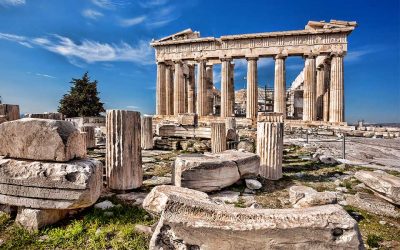
To protect and preserve the monuments on the Athenian Acropolis, the Ministry of Culture introduced a daily limit of 20,000 visitors, staggered at an hourly rate.
© Shutterstock
The platform also includes a Hellenic Heritage Members program, offering long-term and lifetime membership through a digital culture card. Members receive benefits such as free entry to selected venues, discounts on cultural products, and access to special events, guided tours, and screenings.
Other services include Hellenic Heritage Experiences, which offer curated cultural visits such as private guided tours outside standard opening hours, and Hellenic Heritage Digital Experiences, featuring digital guides, augmented reality applications, and virtual tours. AR applications bring sites like the Ancient Agora of Athens, Delos, Sounion, and the Rotunda of Thessaloniki to life, while virtual visits extend access beyond physical travel.
Specialized programs have also been developed for tourism professionals and schools, with the Hellenic Heritage Schools initiative simplifying educational visits through integration with Greece’s national school network.
Speaking at the platform’s presentation, Culture Minister Lina Mendoni described the initiative as part of a broader effort to bring all digital services related to archaeological sites under a single framework.
“The project we are presenting today serves the ‘economy of experiences’ and the creation of a strong, distinctive identity,” Mendoni said. “It leverages technology to support the protection, promotion, and sustainable development of Greece’s cultural heritage.”
Ten new entries in Greece’s National…

New restoration works will open more…
For World Alzheimer’s Month, a new…